by Bruce Steele | Jun 23, 2016 | Mangalitsa Pigs
The true story of how Mangalitsas first came to the U.S…. Winfield Farm pigs are descendants from this original herd.
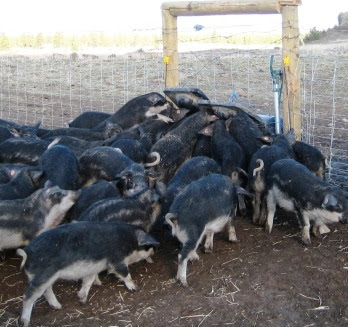
A NEW PIG IN TOWN – story and photo by Heidi Broadhead
Heath Putnam just wanted some tasty pork. And he figured he was not alone.
“There are certain things that people pay money for willingly. They hit people on a really, really low level. Good food is something like that. Porn is something like that. Prostitution. Drugs,” he said. “When I tasted the Mangalitsa, I knew it was one of those things.”
Mangalitsa pigs, also known as Wollschwein or Wooly pigs (the name that Putnam chose for his business), are native to Hungary. This lard-type breed of pig (i.e., valued for its natural marbling as opposed to American pigs that are bred and fed to be lean) was not available in the United States until last fall, when Putnam imported them from Austria.
Putnam first tasted a Mangalitsa sausage when he was working in Europe. He and his wife and business partner, Zuzana, were repeatedly disappointed by the quality of meat here. They decided to import a small herd of Swallow-Bellied Mangalitsa, a close kin to the wild boar, because they thought this nomadic, foraging pig would be the European breed most likely to thrive in the cold, dry Palouse region of Washington State.
Putnam had never been a farmer, and he had no interest in becoming one. He found a local rancher, Gary Angell of the Rocky Ridge Ranch 30 miles west of Spokane, to raise the pigs. Angell’s area of expertise was forage-raised beef. When he told neighboring farmers about the project, he mostly heard responses like “You’re crazy” and “They’re all gonna die out here.”
Putnam planned to go to Austria with Angell to select and purchase the Mangalitsa pigs. Due to some last-minute health problems, Angell had to stay behind and Putnam went ahead on his own, visiting nine farms and amassing as much information as he could for Angell on how to properly breed, raise and finish the pigs.
He joined the Mangalitsa Breeder’s Association, a group dedicated to reintroducing the breed to Austria (it disappeared temporarily in the 1970s) and to maintaining the quality of the breed. He studied charcuterie with a butcher and got whole-hog tips from a renowned Austrian chef.
“He went over to buy nine pigs,” Angell said. Putnam instead chose to import 29 hogs—two boars and 27 sows, the maximum that could fit in one cargo hold. This allowed him to maximize genetic diversity with three to four lines.
Challenges ensued. After being quarantined in Austria from March to May 2007, Putnam’s Mangalitsas were transported to a quarantine center in upstate New York. From May 12 to August 12, the pigs underwent various tests, delaying their stay long enough for 65 piglets to be born in quarantine (and accruing $1,000 per pig in boarding costs). Wooly Pigs lost 10 piglets on the truck between New York and Spokane. At the ranch, the piglets had a negative reaction to a vet-recommended vaccination and they lost one more.
In November, they slaughtered three piglets for samples and to fill their first restaurant order—from the French Laundry—which revealed the lack of USDA-approved processing facilities in their region that could deal with their special slaughtering needs—like keeping the pigs in a low-stress environment leading up to the slaughter, which is important to Wooly Pigs’ philosophy of humane farming and something that Putnam maintains is crucial to preserving the meat’s flavor.
Tasting the Meat
I visited Rocky Ridge Ranch last November. We sat around the kitchen table—Putnam, Angell, Angell’s wife So and me.
“We are the first four people to try the North American Mangalitsa,” Putnam said as he spooned the three-month-old roasted piglet meat onto our plates. “Not like anything you’ve ever tasted, right?”
The dark meat was so moist it crumbled as soon as the fork touched it. We ate the jowls. We chewed the meat off tiny ribs. We ate soft fat that tasted more like cream or butter. We each had different ways of describing what the meat tasted like, but we all agreed on one thing: This does not taste like pork.
Eating a Mangalitsa is like eating a pig from a hundred years ago. It’s a completely different kind of animal. Since the middle of the 20th century, U.S. pork demand has gone the way of lean—lard was replaced by vegetable oils for cooking, and people began to prefer meatier cuts. Pigs were bred to be lean and to grow very quickly.
Old-style Mangalitsas (what Putnam calls on his website “unimproved breeds”), on the other hand, come from a line that was primarily raised in Hungary, Mangalitsas cross-bred with Serbian wild boars.
“They’ve been behind the Iron Curtain since the ’50s,” said Angell. “Maybe that has something to do with it.”
One look at these near-wild beasts will tell you that this is no ordinary pig. The sows have high, curved backs with coarse gray, black and brown hair on their backs and falling over their eyes. They lift and throw giant rocks with their mud-covered snouts. A couple of them nibbled at the back of my leg, which made me a little nervous after hearing that #5 had recently bit Angell, leaving a pretty nasty bruise. Apparently, as long as I wasn’t a coyote or some other predator trying to get to a piglet, I was safe. (Mangalitsas are very protective mothers.)
And most of the pigs we eat in Washington State come from somewhere else. Although exact consumption data is not available, the Washington Department of Agriculture estimates that 90 to 95 percent of pork consumed here is from out of state, primarily from large producers in the Midwest. (As a comparison: As of December 1, 2007, Washington had 29,000 total hogs and pigs. Iowa, by contrast, had 18.2 million.) Input methods vary, but the predominant feed for pen-raised pigs in the United States is corn and soybean meal.
Mangalitsas are self-sufficient and forage in social groups without needing to be fed or moved from one spot to another, so they are perfectly at home in their 30-acre field. Wooly Pigs raises all their pigs (Mangalitsas and Berkshires) on protein-rich crops in the summer. In the fall and winter, they forage on dry oats, peas, sunflowers, turnips, weeds and grasses. They are finished on hay (alfalfa-barley) and a mix of local grains.
“The quality of fat is amazing,” the Herbfarm’s Executive Chef Keith Luce said of Wooly Pigs’ Berkshires, which are raised on the same diet as the Mangalitsas. “It’s embarrassing, actually. We were taking fat and spreading it on bread like butter.”
woolypigs.com
Heidi Broadhead is a regular contributor to Amazon’s books blog, Omnivoracious, and is currently writing monster descriptions for the next edition of Beasts! for Fantagraphic Books.
by Bruce Steele | Jun 3, 2016 | Uncategorized
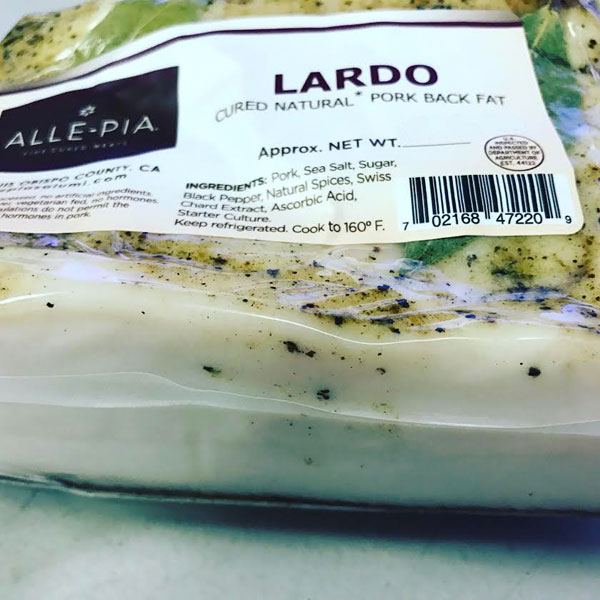
 Call Alle-Pia, Inc. at (805) 461-6800 or email at: info@allepiasalumi.com for pricing.
by Bruce Steele | Apr 25, 2016 | WF News, What Chefs Say
Winfield Farm Mangalitsa Wowed the Crowd at the 3rd Annual Santa Barbara Food and Wine Neighborhood Market Tour at the Bacara Resort
Capping our spring fling promoting Winfield Farm Mangalitsa pork, we were honored and delighted to represent the Santa Ynez Valley farm community, among Santa Barbara County’s most talked about culinary neighborhoods, all gathered on a sunny Sunday in April in the beautiful surroundings of the Bacara Resort’s Courtyard, to celebrate and benefit The Julia Child Foundation.
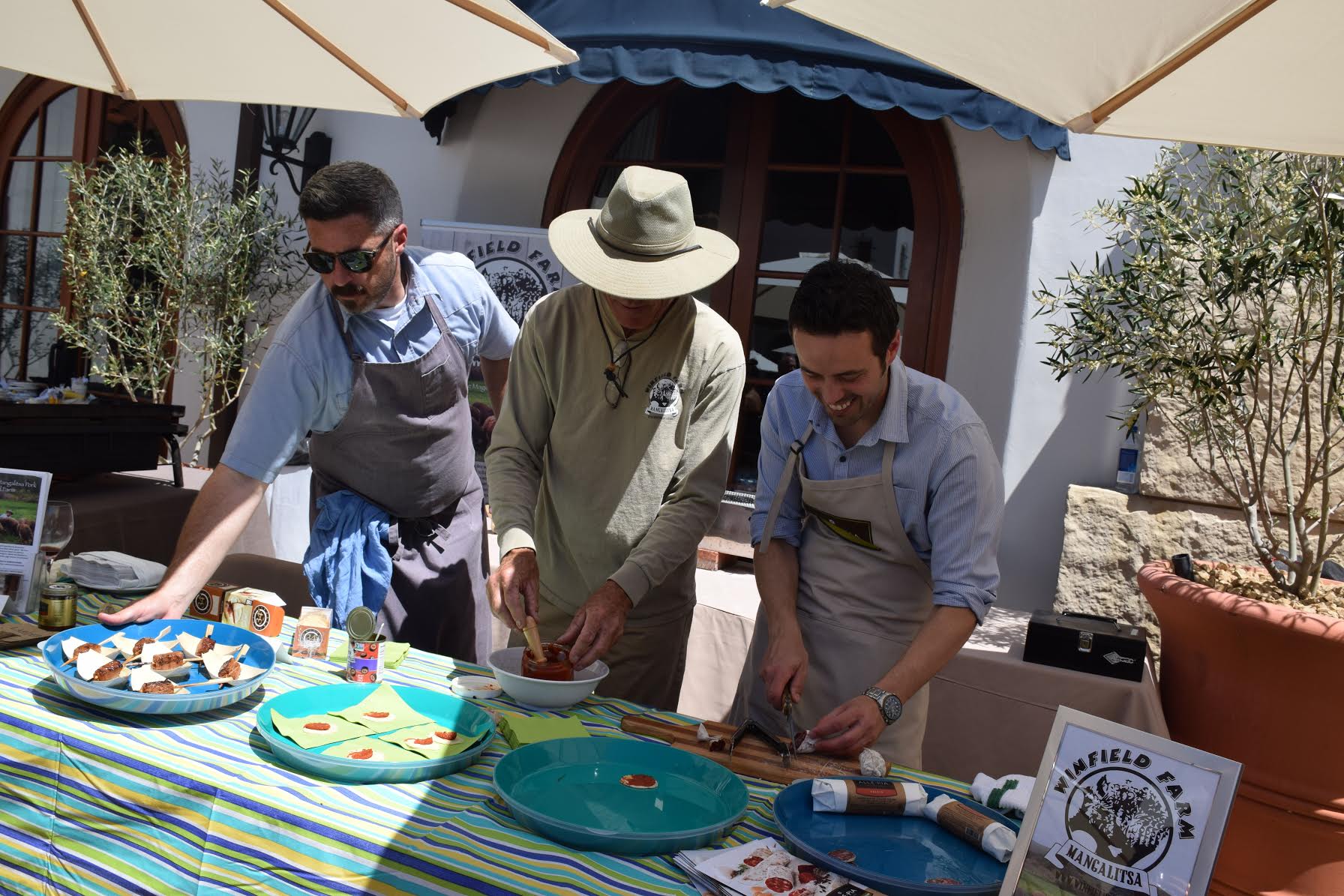
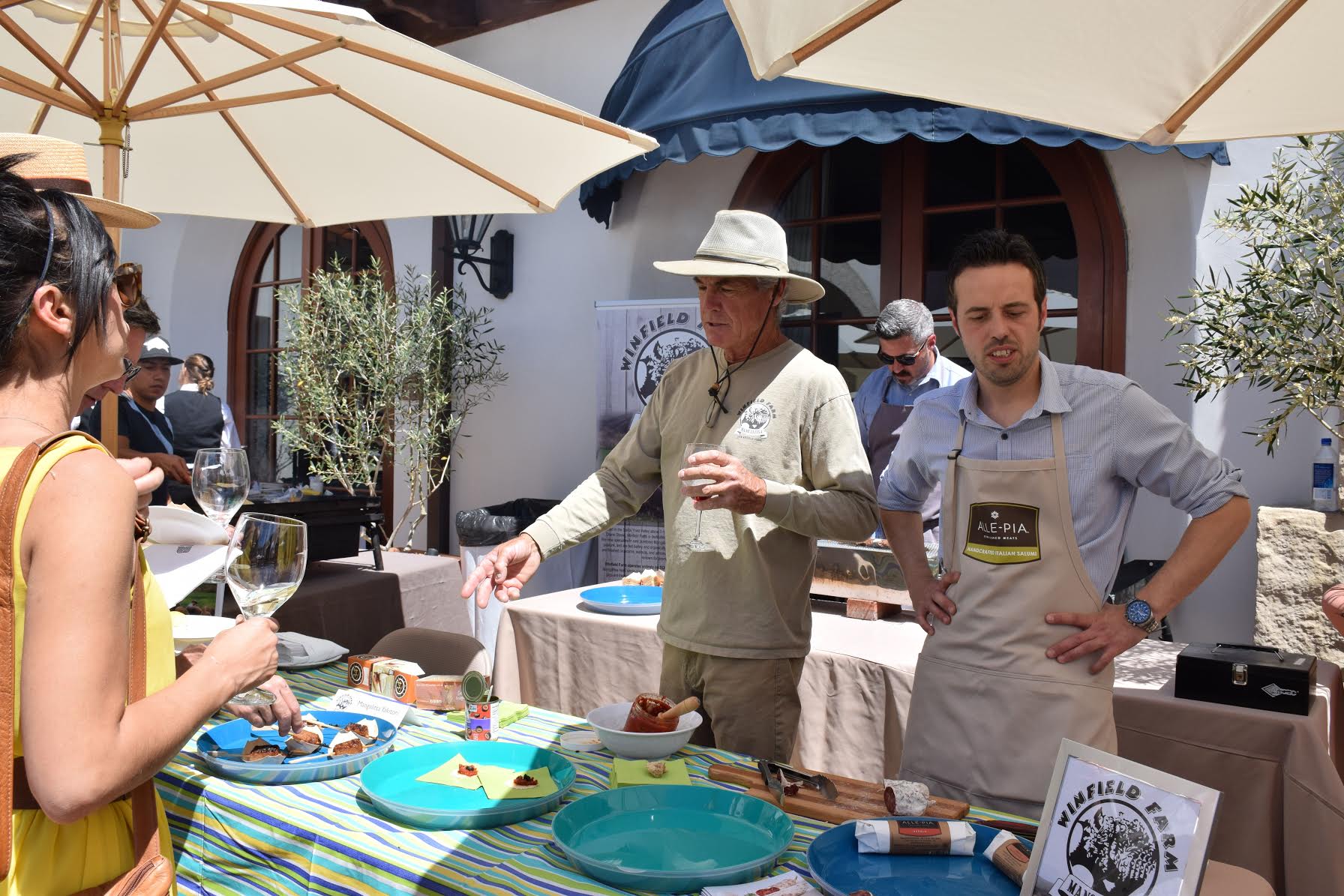
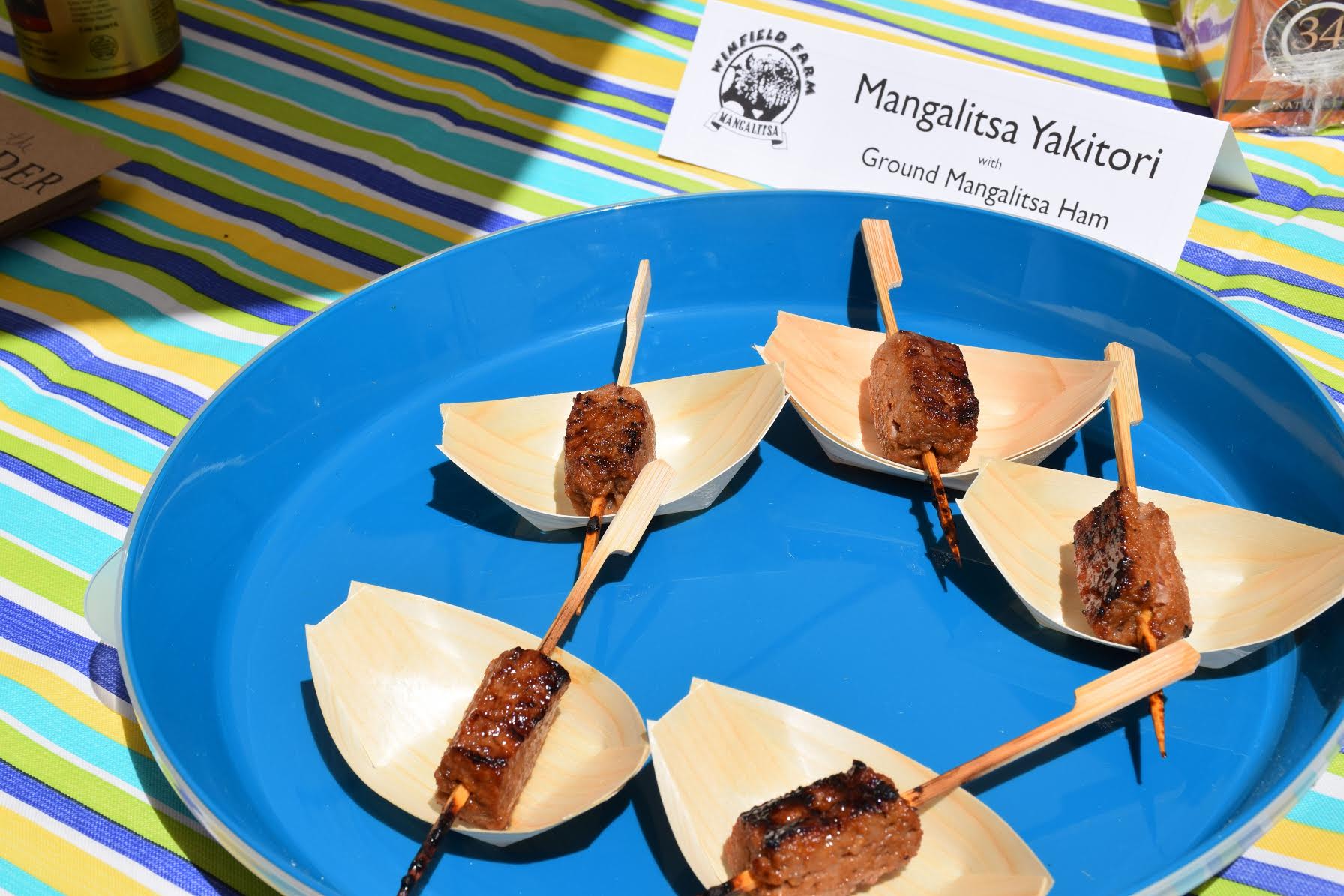
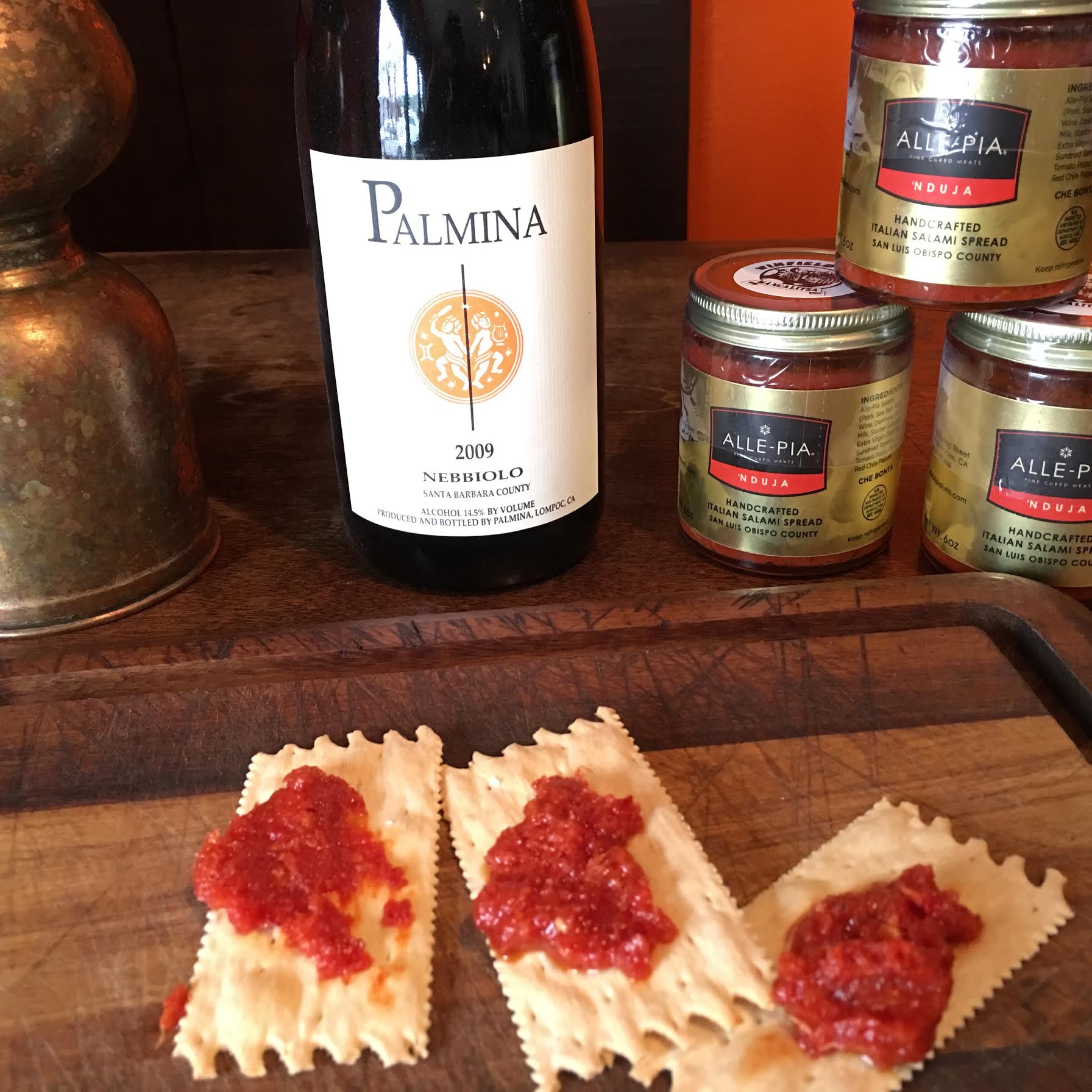
The Food and Wine Neighborhood Market Tour at the Bacara, a world-class resort overlooking the Pacific Ocean near Santa Barbara, featured tastings by dozens of local and nationally-acclaimed chefs, artisans, winemakers and farmers. Our Winfield Farm table served up Mangalitsa meatballs dipped in secret sauce created by Chef extraordinaire Jensen Lorenzen (Bruce’s nephew), which he fired on his yakitori grill. Bruce and I slathered artisan crackers with Mangalitsa Nduja – a new Winfield Farm product created by our salumi partner Alle Pia from cured Mangalitsa salami Barolo, ground and infused with Palmina Nebbiolo wine, with sun dried tomatoes, garlic and seasonings. Nduja’s texture is reminiscent of tomato paste, but the flavor is out-of-this-world piquant!! Alle Pia partner Alex Pellini also joined us and offered their hand-crafted salami Barolo and Tartufo.
The event was patterned after a farmers’ market, hours 11 AM to 2 PM. Throngs of people table hopped, sampling food and drink from diverse communities including Santa Barbara’s eclectic Funk Zone, Old Town Goleta, the Arts District, Los Alamos and Lompoc, as well as SY Valley.
Food and wine presentation tables ringed the courtyard, while dozens of cloth-draped tea tables scattered about offered tasters a place to sit and enjoy the food and drink.
Event presenters all committed to providing 500 servings – and between the meatballs, Nduja and salami we must have at least doubled that quantity. It seemed that as soon as Chef Jensen set out a tray of Manga meatballs, they vaporized — and the same with the Nduja and salami. Then we noticed the same people coming back again and again … a group of people sitting at the tea table nearest our stand had become fast fans of Mangalitsa pork!
The crowd came early and many lingered until the last taste and sip were stowed away. The Bacara’s Neighborhood Market Tour was a great way to spend a sunny Sunday — educating friends and neighbors about the magical flavor of Mangalitsa pork. Many stopped by to thank us for sharing, and to compliment Winfield Mangalitsa as the best bite of the event. The Chefs at the Bacara also took note. Winfield Mangalitsa pork is now featured on the Bacara Bistro’s breakfast menu! And the Chef told us they’re opening a new restaurant soon, and expressed interest in Winfield Mangalitsa chops… We’re excited about that prospect!
Photo gallery:
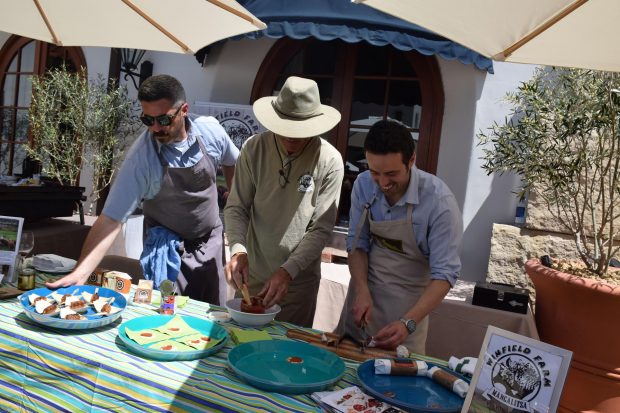 Chef Jensen, Bruce and Alex lay out Winfield Mangalitsa tasting at the Bacara
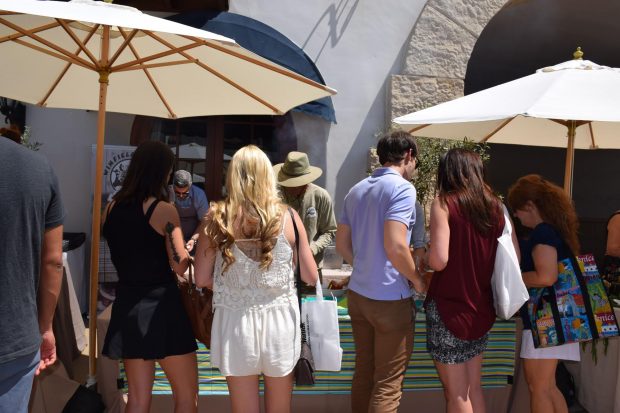
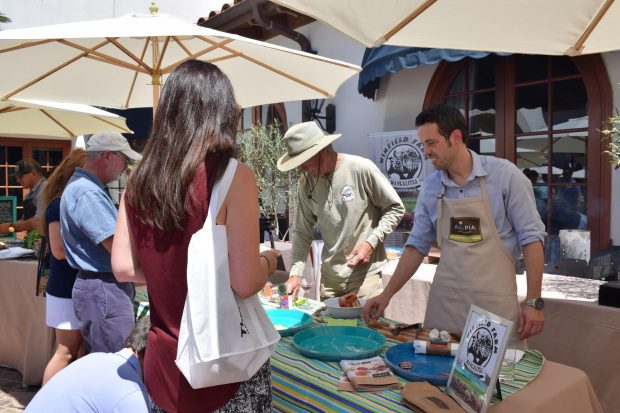
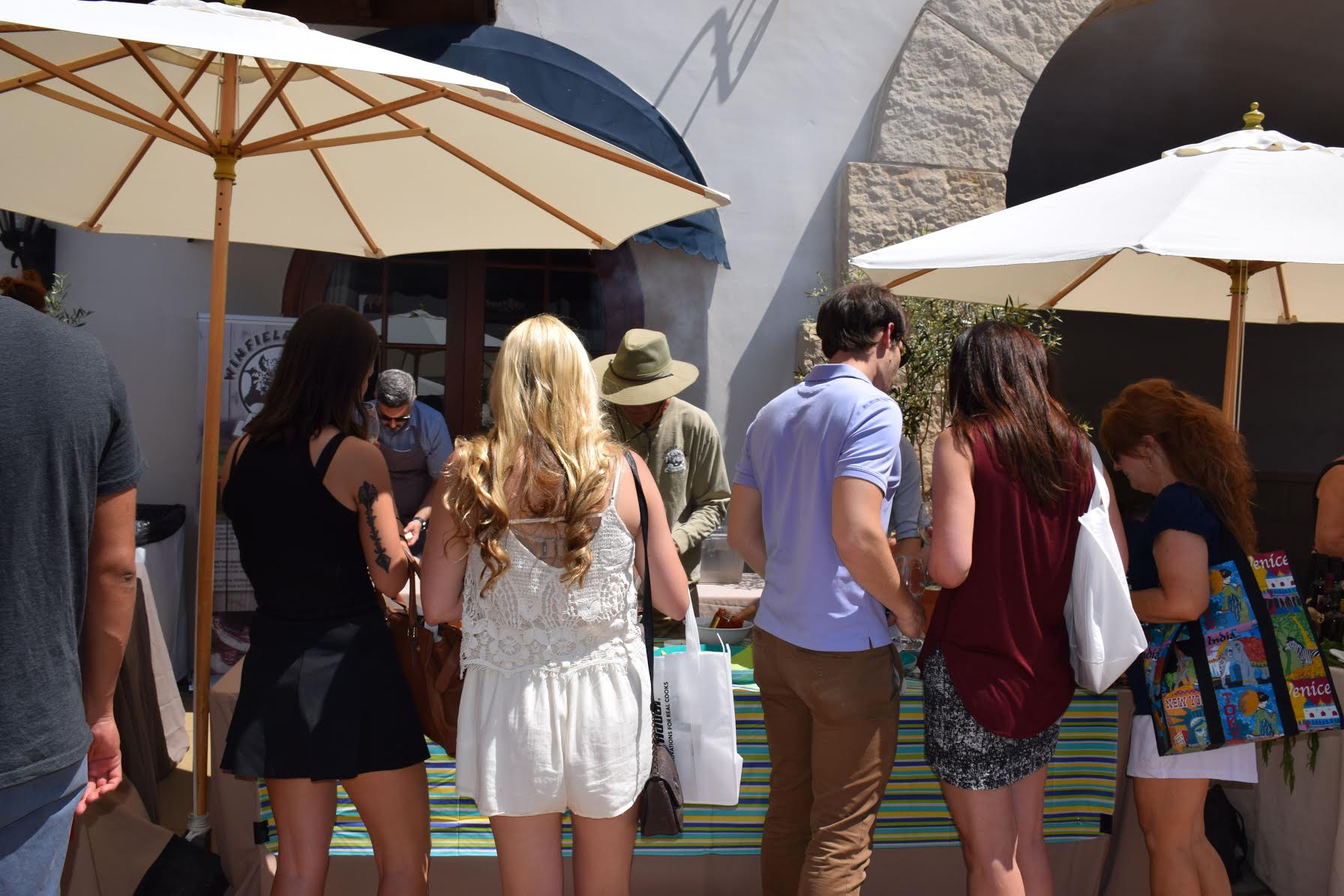
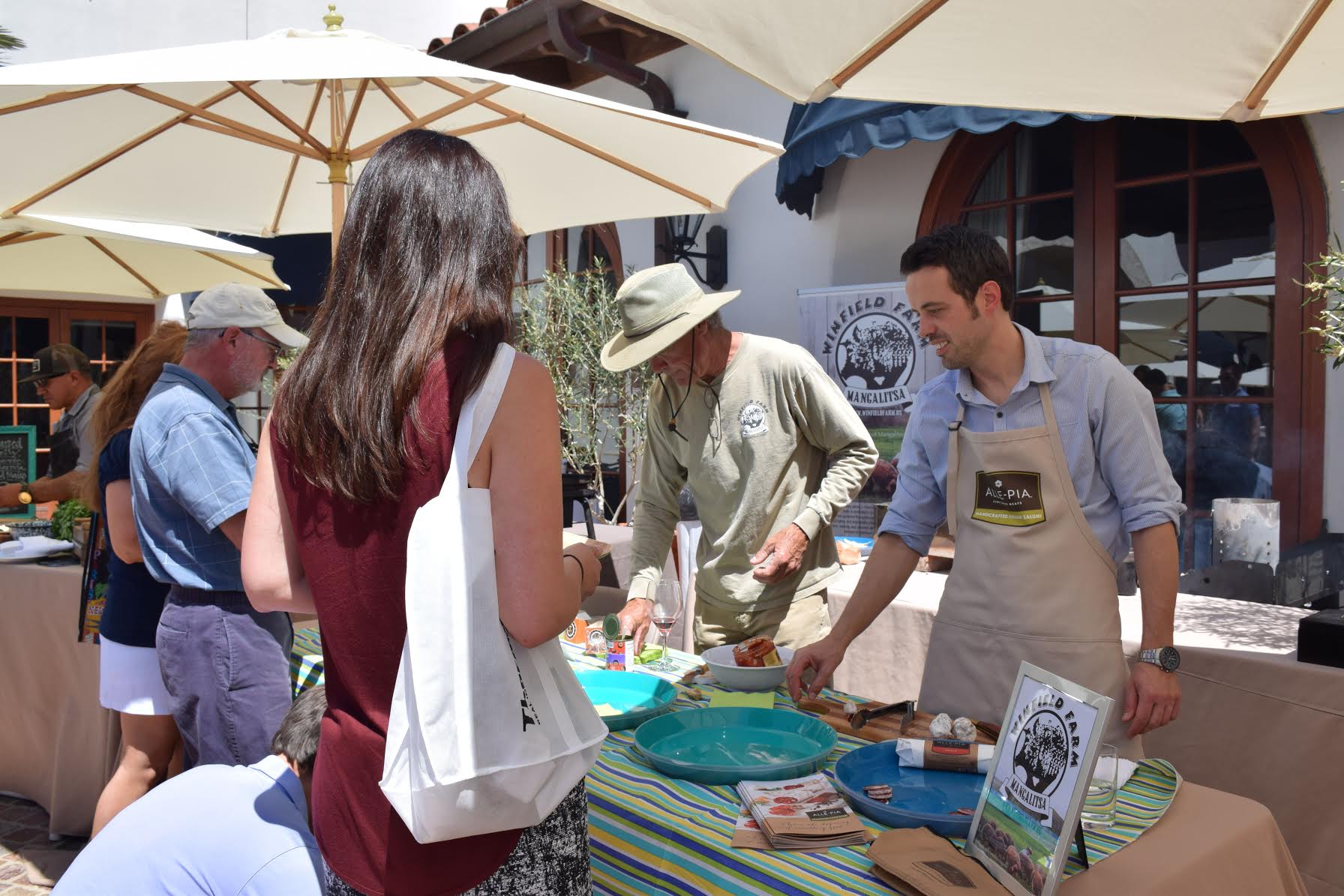
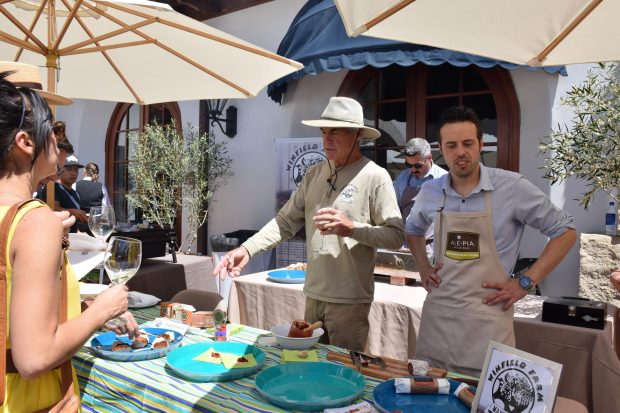 Event goers crowd the Winfield Farm table at the Bacara Taste of the Communities Event
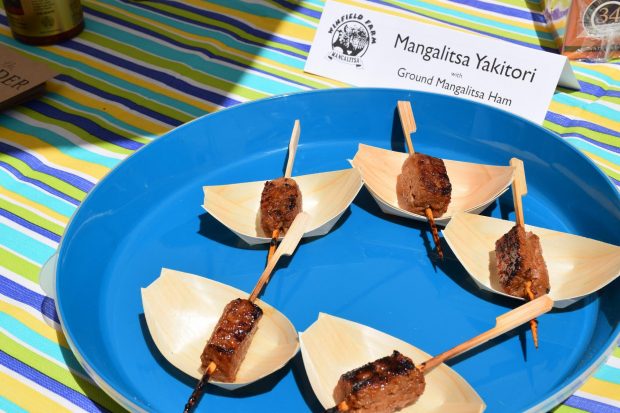 Mangalitsa meatballs yakitori
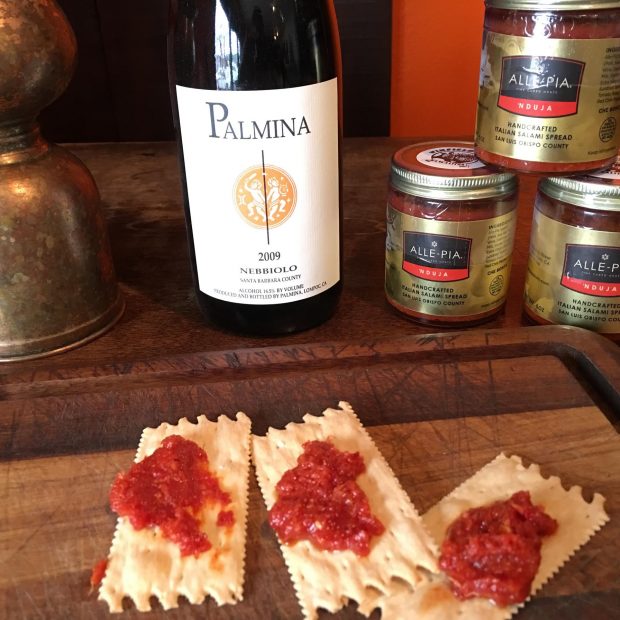 New product: Mangalitsa Nduja infused with Palmina Nebbiolo
by Bruce Steele | Mar 25, 2016 | WF News, What Chefs Say
Winfield Farm Presents the Magic of Mangalitsa at the American Culinary Federation Chefs de Cuisine of California, Los Angeles Chapter
Cochon 555 was just the start of a whirlwind weekend in LA, promoting Winfield Mangalitsa pork!
Our great adventure began with a chance meeting with Chef Daniel Csotai, who visited Winfield Farm in search of backfat to make Hungarian bacon. A Hungarian who grew up with Mangalitsa pigs and is passionate about their flavor profile, Chef Daniel now also happens to be the secretary of the American Culinary Federation Chefs de Cuisine of California, Los Angeles Chapter. CCAC is a fraternal service organization and member of the national American Culinary Federation, the oldest and largest chef organization in America.
Chef Daniel agreed to help us reach out to the Los Angeles culinary community, introduced us to the CCAC education chair, and that’s how we wound up showcasing Winfield Mangalitsa at a special CCAC event – Bourbon and game tasting, hosted by CCAC member Chef Hugo Miranda at the Four Points by Sheraton Hotel LAX. Except in this case, the “game” was Mangalitsa pork. More serendipitous, the event took place the day after Cochon 555, so after securing a reliable pig-sitter, we got to spend a night in LA – a mini-vacation.
Bruce opened his presentation with a history of Mangalitsa pigs, who nearly went extinct until Spanish prosciiutto-makers discovered that Mangalitsa is on par with famed Iberico de Bellota ham. In fact, Mangalitsas are the only other pig besides Iberico approved to be labeled “pata negra”.
Bruce told chefs how Winfield Farm Mangalitsas are raised – on pasture, with a non-GMO diet consisting of barley and organic produce, finished with acorns and walnuts. Barley preserves the quality of the luscious white fat, he said. Corn turns the fat rancid over time — not a good thing when you’re hanging a ham to dry cure for a couple of years.
Bruce’s nephew, chef Jensen Lorenzen, attended the event with us and extolled the attributes of Mangalitsa pork from a chef’s perspective. Mangalitsa’s prime value is for charcuterie, and several chefs asked technical questions about the curing process and sausage-making. Making sausage is another excellent thing to do with Mangalitsa fat, which is very high in oleic acid – the good fat!
Then came the tasting.
Chef Hugo Miranda has served as Executive Chef in some of the most high-end restaurants in the Los Angeles area. Adding to his experience as a high-end culinarian, Chef Miranda spent half a year in Costa Rica enhancing his culinary expertise in fine local Asian fusion cuisine. His creativity preparing Winfield Mangalitsa loin and rib roast was inspirational – a real tribute to the magic of Mangalitsa pork.
After the feast he revealed his secret: he marinated the roast in a brine with orange juice and herbs for two days! Chef Hugo’s Mangalitsa entrée was melt-in-your-mouth delicious.
His dessert – Mangalitsa bacon-infused bread pudding – was yummy also (although by that time we were so full we couldn’t finish it all).
Chef Hugo received an award from the CCAC for his commitment to the association; it was well deserved. He promised before the event, “Yes I’ll make sure we showcase Mangalitsa!!!” He was true to his word: he really did it !!
Thanks again, Chef Hugo! Everyone at the event loved Winfield Mangalitsa pork!
Photo gallery:
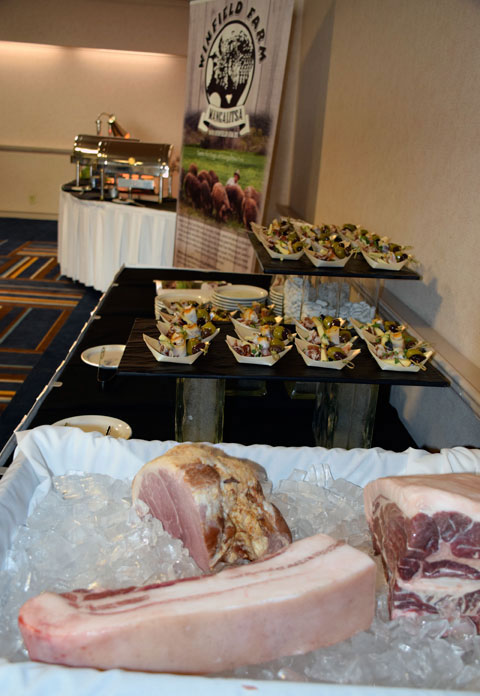 Winfield display at CCAC
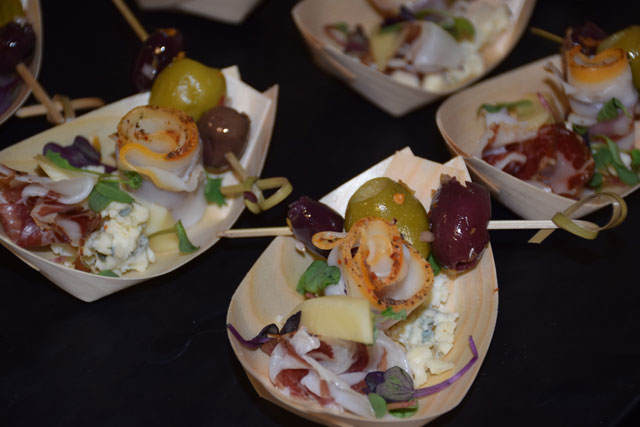 Charcuterie close-up — Coppa, Lomo and Fiocco
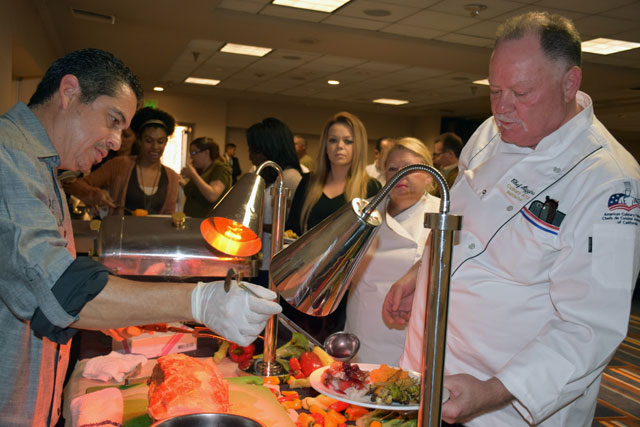 Serving Winfield Mangalitsa loin roast
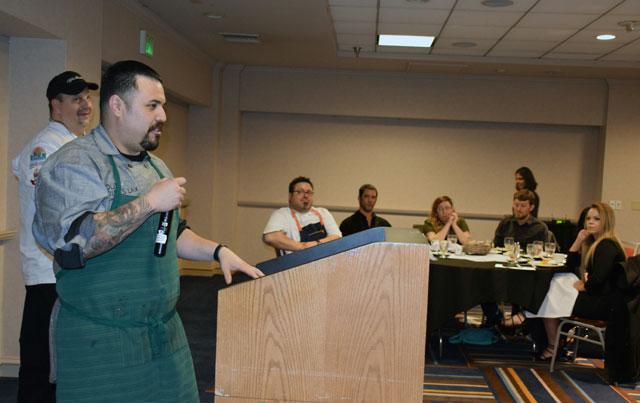 Chef Hugo reveals his secret to preparing mouth-watering Mangalitsa
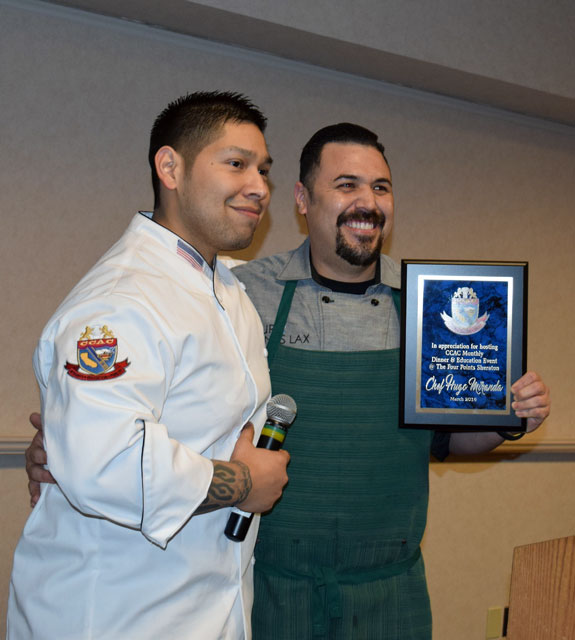 CCAC presents award to Chef Hugo
by Bruce Steele | Mar 20, 2016 | WF News, What Chefs Say
Winfield Mangalitsa goes to LA – COCHON 555
Spring is always a busy time at Winfield Farm – and this year is proving to be busier than usual. Besides tending the new crop of Manga piglets, moving (and rebuilding) fence, herding pigs to new pastures, (praying for rain!), we’re ramping up our marketing efforts, with exciting new prospects – many in the City of Angels!
This spring we entered a 200-pound Mangalitsa pig into the Cochon 555 event in LA, which took place at the exclusive Viceroy Hotel in Santa Monica on Sunday March 13.
Cochon is a national competition conducted in 10 locations across the country, where five chefs each create six nose-to-tail bites, to be judged by an elite panel. Our partner in this venture was executive chef Jason Neroni from the Rose Café, the iconic restaurant in the heart of Venice Beach, California that has served locals and travelers alike since 1979. Chef Jason’s menu focuses on local Southern California cuisine with an international influence from his world travels – which included an invitation from the country of Spain to serve as a culinary ambassador, where he worked alongside some of Spain’s best chefs. Spain’s interest in Hungarian Mangalitsa pigs, ranked with Spanish Iberico as the only black-footed hogs allowed to be labeled ‘pata negra’, was instrumental in saving Mangalitsas from extinction. Chef Jason knows all about Mangalitsas — so he was the perfect partner for our Hungarian wooly pig.
Chef Jason’s menu for Cochon is a statement to his creativity – and his skill in displaying the rich flavor profile of Mangalitsa pork:
Testa pastrami and taleggio croissant / deli pickles (delicious)
Roasted pork meatballs (amazing!) / smoked burrata, chicarones (melt in your mouth crispy), tomato marmalade
Lasagna / fennel and pork sugo, porcini jus (in the opinion of many, the best bite in the competition!)
Buerre de jamon / blood butter, shaved prosciutto cotto and lomo, demi baguette (sooo good!)
Double ramen / pork fat, spring garlic, fermented turnips, poached belly, noodles (the best of all the ramens)
Stuffed trotter terrine / foie gras, black truffles, cognac soaked morels (absolutely elegant)
As participating farmers, we were able to sample the tastings of all the chefs ahead of the crowd that swarmed the Viceroy’s patio. Both Bruce and I voted for Chef Jason as the best bites in the competition!! We would have voted the same way even if our pig wasn’t competing! Chef Jason Neroni really did Winfield Farm Mangalitsa proud.
Thanks again, Chef!!
A photo gallery of Cochon activity
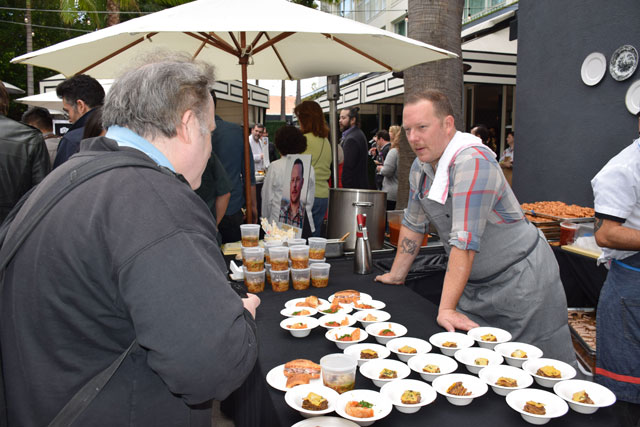 Chef Jason at his table
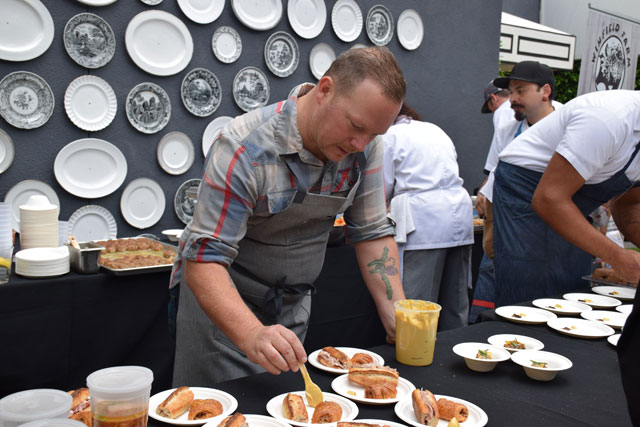 Chef Jason prepares a tasting
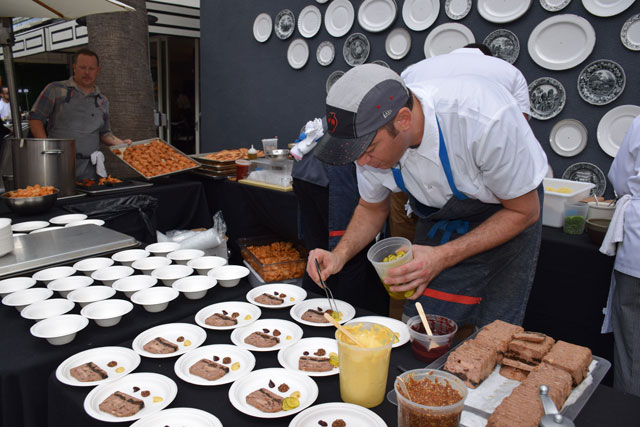 Prepping trotter terrine
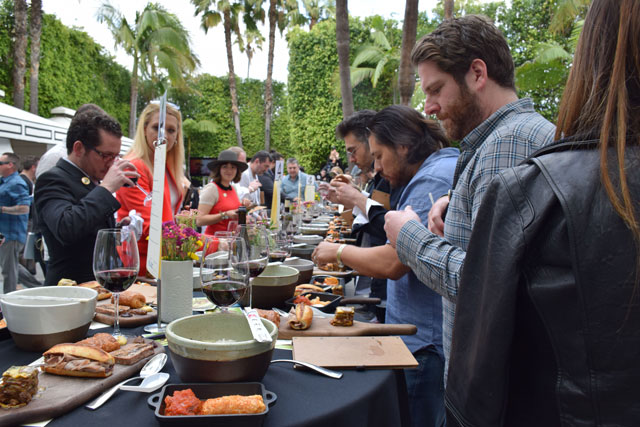 Judges sampling bites – #4 – Chef Jason, The Rose Cafe
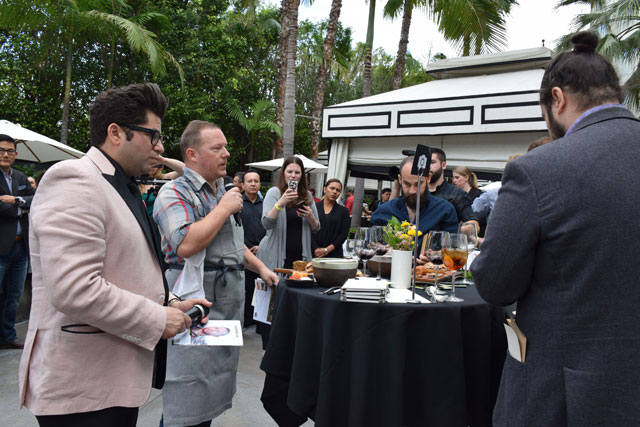 Chef Jason describing bites