Growing from seed with no fossil fuel

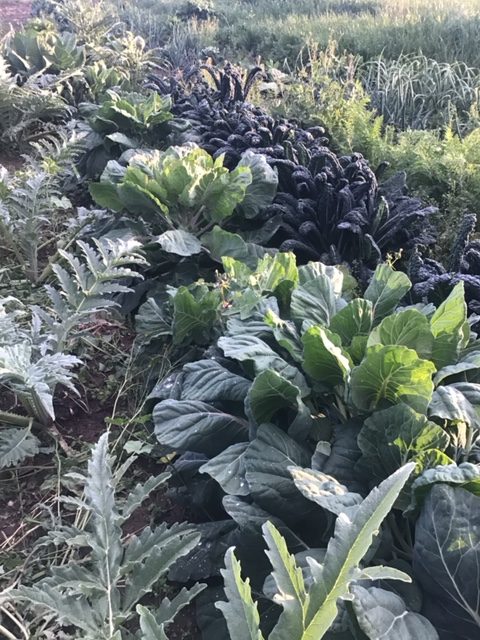
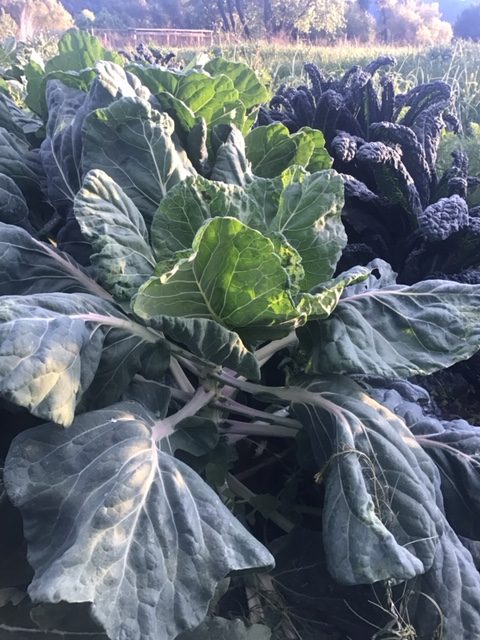
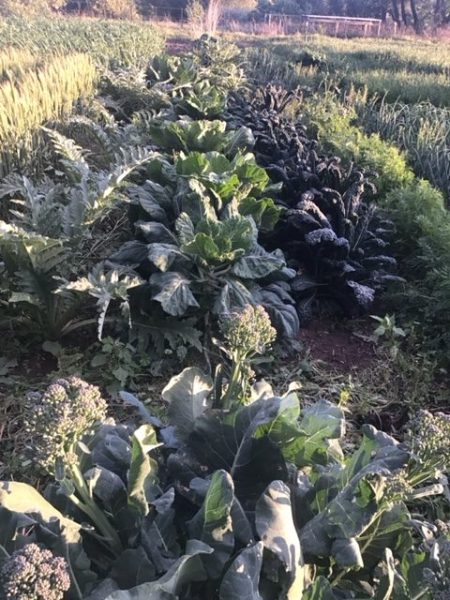
Purple garden majesty — Bruce’s garden after the April shower.
There’s broccoli, artichokes, Brussel sprouts, kale, carrots, and in the background hard red wheat.

He grew everything from seed with no fossil fuel. He’s rightly proud of his endeavor, all direct seeded and weeded with a grub hoe.

@winfield_farm is eating plenty high on the proverbial hog these days!! The afternoon sun shines light on the abundance— agriculture as art!

POTLUCK CONVERSATION
(Purple garden majesty)

I was at a potluck that several local gardeners hold where they can show off their cooking and tell stories. I was bragging about my garden and showed some photos. Another gardener asked me, “What do you do with it all? “

I had a pat answer, which is: the pigs are always eager customers. The question has lodged in my brain, however, and I keep trying to rationalize — an acre of grains, red wheat, white wheat, spelt, barley and corn, along with lots of Cole crops from the winter garden – because the “what do you do with it all “question is also a “why do you do it all,“ or at least in my head it has morphed into that. 

Mostly I grow grains for dry storage, but I also try to keep two years supply in the drying shed and always keep seed for next season. I can answer “what I do” better than “why I do it,” because every season for many years, I have squirreled away the fall bounty. Finding the tools to process at very small scales is a parallel pursuit, and finding recipes are corollaries to the harvest abundance, but usually only pecking at the volumes waiting in the shed. 

 There is an advantage in growing grains in that they can be accurately weighed and entered in some sort of calorie ledger. “What is enough” is a valid question and it bothers me a bit, but “how much is possible” nags at me too, but in a positive kind of way.  

The garden is growing very big these days, but it is spring and the winter was mild. I keep planting and so I keep increasing how much garden I need to keep cultivated. It can catch you and overwhelm you as the heat turns on, too many weeds rooted too deeply. So, you cultivate between rows at the first hint of newly germinated weed seeds. Bare ground between rows is eventually shaded by crops, but lots of cultivation while it is bare is essential.  

What is possible, what tools, what seed, when to plant, those things I know. How to do it without lots of power, and again, what is possible? In that I have some confidence, borne by years and years of gardening. Still, it is a solitary pursuit and has been for most of the thousands of hours gardening in my life. 

 So why so much? I don’t really know, but I imagine somewhere in my gene line an answer lies. It wasn’t always a full larder, and no I can’t compensate for the distant past, but an empty belly has a very long memory, I think, or no memory at all. 

Bruce

We’re Delighted to Announce: We’ve Got HAM!

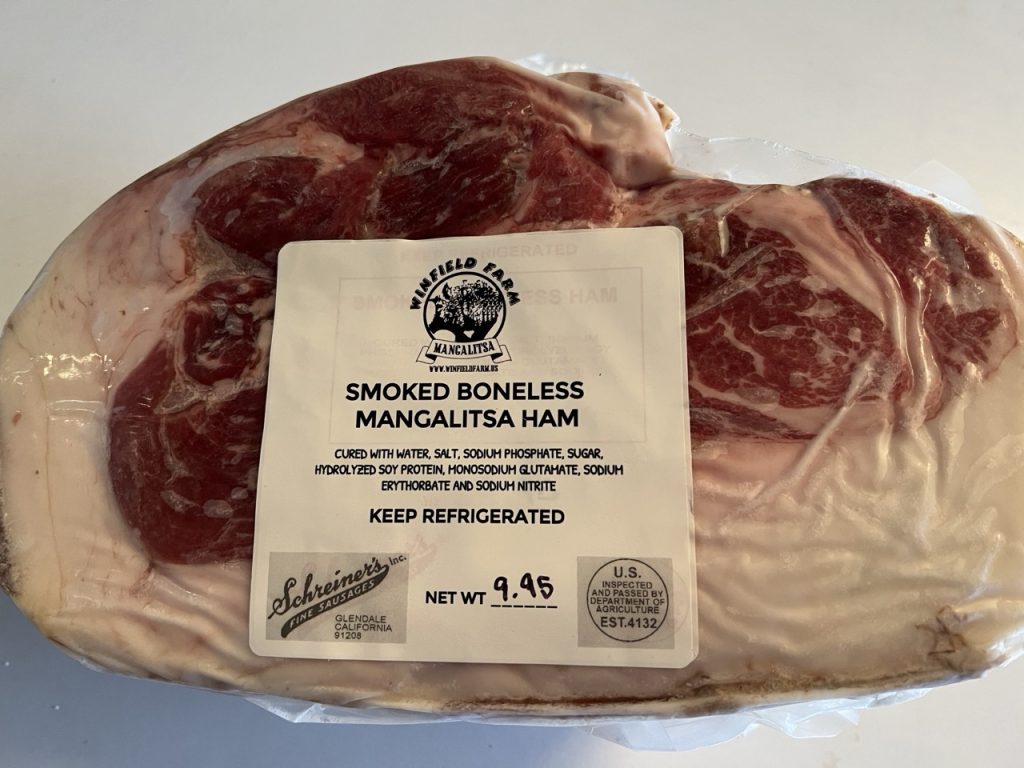
Thanks to our new association with Schreiner’s Fine Sausage in Glendale, we’re now able to produce Smoked Boneless Mangalitsa Ham!

We’re offering Winfield Farm Mangalitsa ham in two styles:

The specialty of the house:

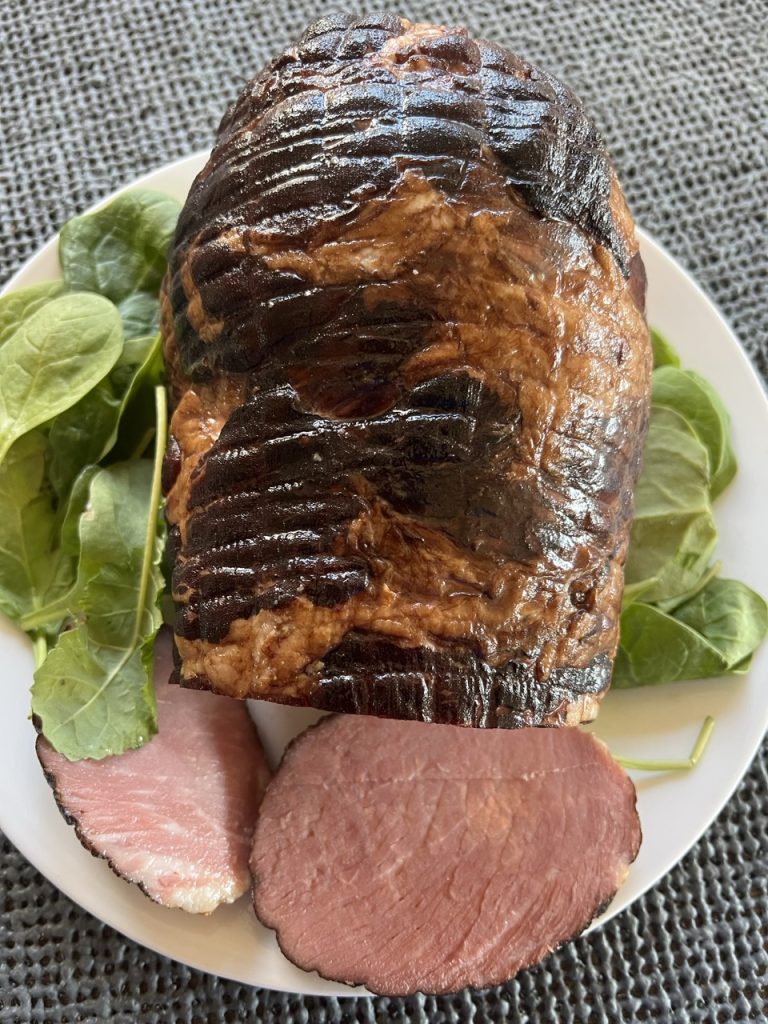
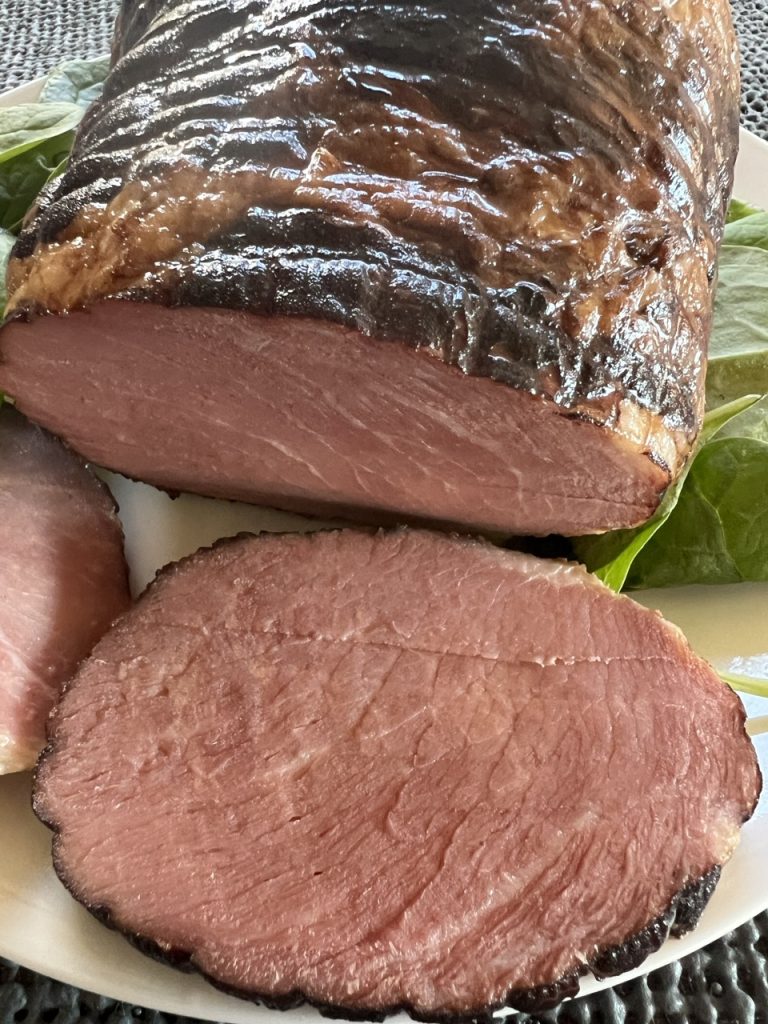
Boneless Mangalitsa Black Forest Brand Ham

Shreiner’s dips boneless Mangalitsa ham in caramel #29 to produce an amazingly succulent, flavorful treat!

Get 4, 5, or 6 pound packs (Price $23 / pound) now from our limited supply of Mangalitsa Black Forest Brand ham at our online market.

We’re also offering:

Smoked Boneless Mangalitsa ham

Get 5 or 10 pound packs (Price $18 / pound) of Smoked Boneless Mangalitsa ham now at our online market.

#####

ANNOUNCING A NEW “PARTNERSHIP” and A NEW PRODUCT (with more to come!)

Our hunt for a USDA certified smokehouse that could process our Mangalitsa bellies into hickory smoked bacon led us to Schreiner’s Fine Sausages. Family-owned, Schreiner’s has been located in Glendale since 1952. (Glendale is about 2 ½ hours south of Winfield Farm.)
Wally Schreiner is now the third generation to run the family shop, which still smokes all of its own meat, under USDA inspection.  Wally said of course he could smoke our bellies, since our pigs are slaughtered and butchered by USDA certified establishments. But we would need our regular butcher to slice and package the bellies for bacon. (This extra step is now needed because our regular butcher no longer smokes product inspected by USDA – a requirement for resale.)

The saying ‘when one door closes, another door opens’ is so true — and serendipitous. We discovered a veritable treasure trove of unique and very tasty offerings at Schreiner’s — and the opportunities are virtually endless!

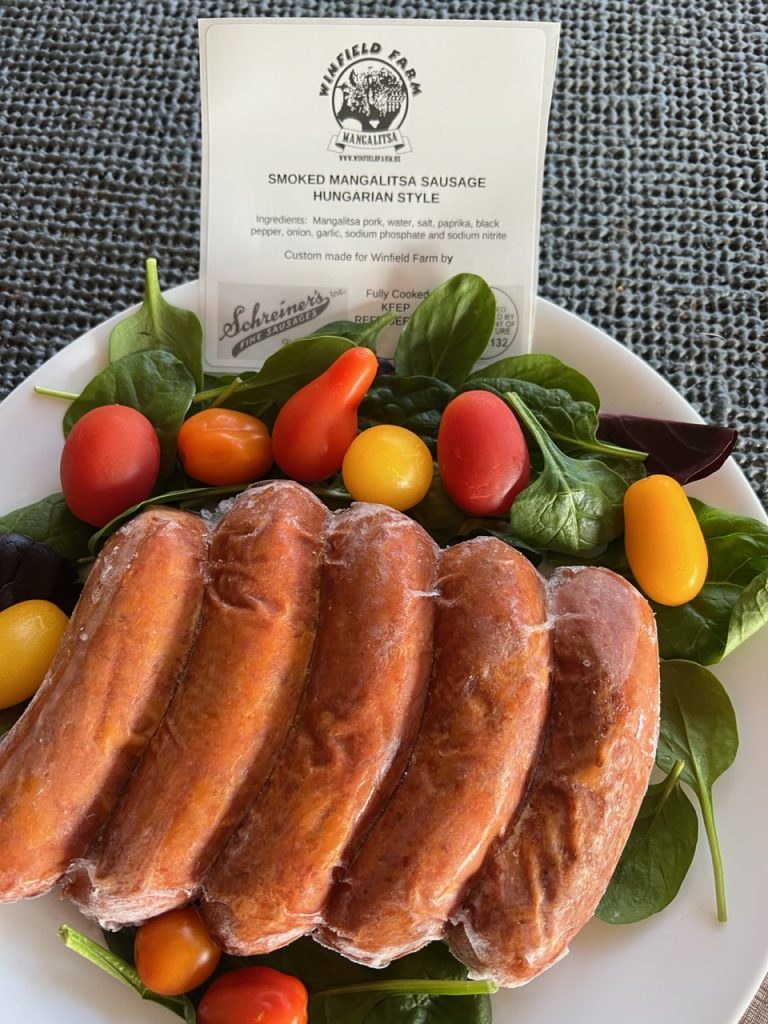
To wit, we’re delighted to announce that, in addition to Mangalitsa bacon smoked by Schreiner’s, we’re now offering Smoked Mangalitsa Sausage – Hungarian style. Ground Mangalitsa pork is seasoned with salt, paprika, black pepper, onion, and garlic. The encased sausages are smoked, fully cooked, then packaged and frozen. The flavor is sensational!

The introductory price on our online Mangalitsa Market is $18 per pack of 5 sausages.


A package of Hungarian Style Mangalitsa sausage straight from the freezer. These weiners are so good, we often eat them straight out of the package, cold.

The future of our new relationship with Schreiner’s is bright! Schreiner’s can make Mangalitsa Kielbasa (Polish sausage), black forest ham, and many other specialty items for Winfield Farm. We’ll keep you posted on progress.

Meantime, we encourage you to try Schreiner’s smoked Mangalitsa sausage – Hungarian style.
We love these weiners, and hope you will too!!

Note: Smoked Mangalitsa Sausage – Hungarian style is now available for online ordering!


Panchetta from Winfield Farm Mangalitsa

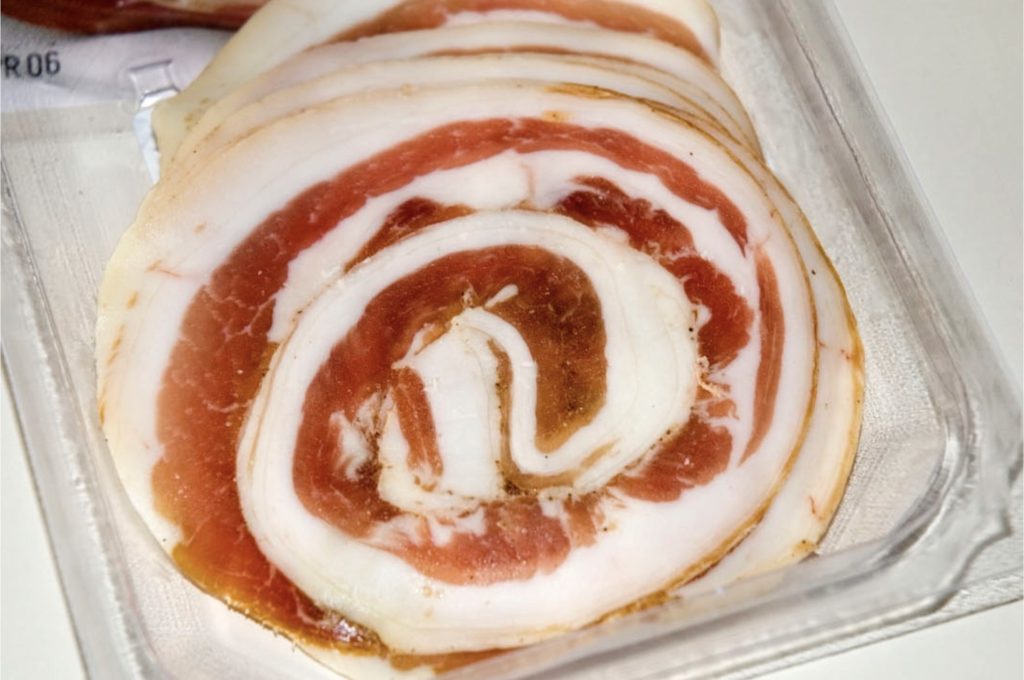
According to Wikipedia, Pancetta is salt-cured pork belly meat.
In Italy, it is often used to add depth to soups and pastas. Foodies worldwide value Pancetta’s flavor profile. Two basic types of pancetta are arrotolata (rolled) and stesa (flat).

For cooking, pancetta stesa may be cut into cubes for use in carbonara pasta or pizza, as is typically found in central and southern Italy. In northern Italy, pancetta arrotolata is commonly served rolled and thinly sliced, and consumed raw (although guanciale, cured jowl meat, is generally considered more traditional).

Photo credit: Nachoman-au – CC BY-SA 3.0, https://commons.wikimedia.org/w/index.php?curid=522168
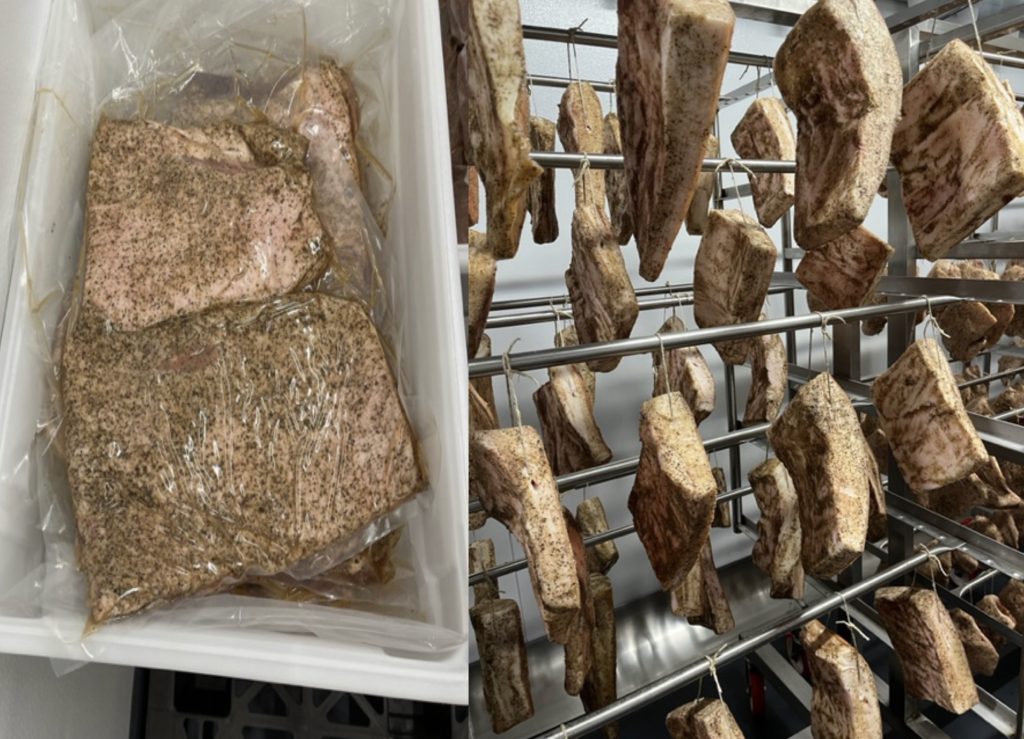
The art of pancetta, as with all salume products, is in the curing process. Here at Winfield Farm, we are pleased to offer an exclusive treat: Mangalitsa pork pancetta cured by Alle Pia Fine Cured Meats.

Following their family tradition, and inspected by USDA, Alle Pia first marinates the Mangalitsa bellies in vacuum-sealed bags for three weeks, to infuse special seasonings, including rosemary, garlic, juniper berry and sea salt. As part of the curing process, the bellies are then removed from the bags and hung in a temperature-controlled chamber for 30 days.

You can taste Mangalitsa magic by special ordering Mangalitsa pancetta (stesa). Email us directly at Winfield Farm (dplesch@gmail.com). Supply is limited (not listed on our online Mangalitsa Market).

$35 / lb Pieces average approx. 4-5 pounds each

Summer ’23 Mangalitsa Sausage Special

Winfield Farm now has a bountiful supply of Mangalitsa link sausage in 3 yummy flavors:
there’s the traditional bratwurst and sweet Italian, and also our new favorite – salt ‘n pepper sausage.
S & P is simply pure Mangalitsa pork with a dash of – you guessed it.

Winfield Farm Mangalitsa link sausage comes packaged 4 links per pack — packages are about 1.4 pounds each. Cost is $16 / pound. (Approx. $22.40 per package)

PLEASE NOTE: We’re offering a special introductory price for our new S & P link sausage — this offer is good through August 31.

Try S & P and get a 10% discount on your order – To order, email Diane and enter “summer sausage special “ in the subject line. Let me know how many packages you would like, and I will invoice you directly via PayPal with your discount.

Please be sure to include your name, address and phone number. (Shipping cost is extra).