
Farm-to-table restaurant Pico Los Alamos features upscale comfort food made with local ingredients, sourced from farmers committed to organic, regenerative and humane practices. Pico owners Kali and Will are passionate about local! Each month Pico features one of their suppliers in their Know Thy Farmer lunch events. Honor beyond honors, Winfield Farm is being feted at the Know Thy Farmer event on February 7.
The Pico promotion for the event announced: WINFIELD FARM –
Mangalitsa Pigs & subsistence farming – Bruce does it all! Join us in the Pico garden for a three-course, wine-paired lunch featuring heritage Mangalitsa pigs from our friends Bruce and Diane Steele at Winfield Farm. The menu will showcase their dedication to solar energy and human powered farming.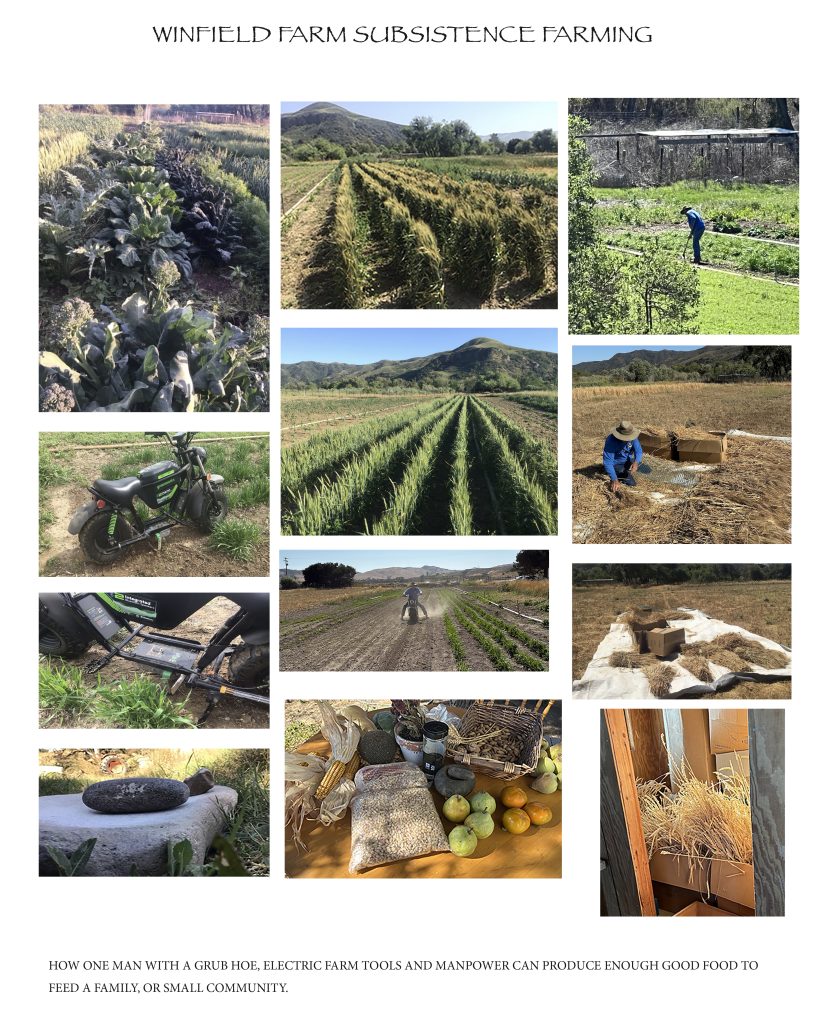
Bruce is excited about this event “It’s great to have a restaurant that has helped support Winfield Farm for a decade,” Bruce says. “It’s nice to have friends willing to try acorns and to have an excuse to showcase the culinary potential of a primitive/minimalist experimental garden.” The lunch menu highlights foods grown at Winfield Farm.
For sure, the menu that Bruce and Kali are planning is unique — 1st course: Durum/buckwheat cold soba noodles paired with 3 kinds of acorn starch “dotorimuk” with little gem lettuce and dipping sauce. 2nd course: cassoulet of tarbias beans, Mangalitsa ham hocks and kale. 3rd course: grandma’s cookbook ‘pumpkin’ pie made from butternut squash and persimmons.
Bruce demonstrates what’s possible for one man to produce with only electric tools and manpower — using no fossil fuel. “Everything but the ham hocks was produced on our farm without fossil fuels,” he says. “The pigs have a carbon footprint.”
He continues, “[this event] gave me an excuse to make three different kinds of dotorimuk, which is likely a first for any restaurant to serve in the US, or anywhere.” The three types of dotorimuk have different colors: pink dotorimuk is from coastal live oak, a favorite of local indigenous Chumash; blond dotorimuk is from tan oak, preferred by Pomo Indians in Northern California; and the brown dotorimuk is from holm oak, the type favored by Iberico pigs on the Spanish dehesa. (Interestingly, Bruce forages for holm oak acorns nearby; Holm oaks have been planted as ornamental trees in many areas of California.)
Bruce plans to set up a table with his metate, nutcracker and samples of various types of grains and their flour for a “show and tell” on Pico’s patio, greeting the sold-out party before lunch begins.
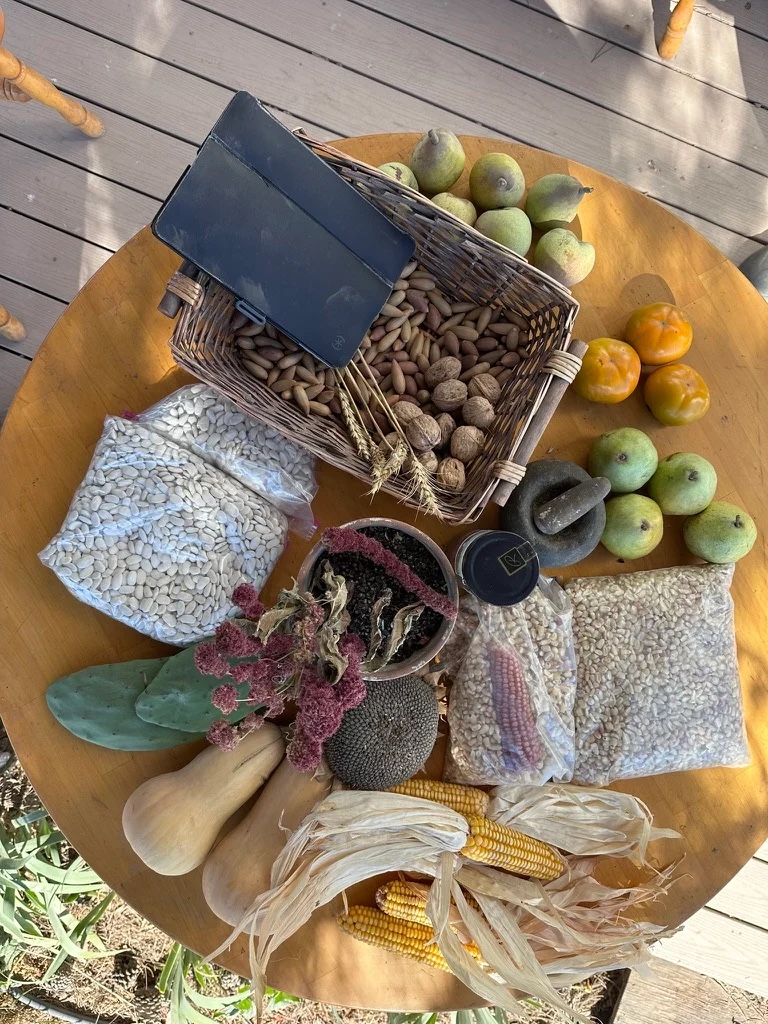
Winfield Farm’s subsistence bounty | Credit: Matt Kettmann