
Bruce wrote and posted this article in his Substack on May 11, 2026 —
Farming or gardening at scale takes energy to control weeds and prepare a seedbed for planting. It does not require as much energy as we put into it, but energy has been almost free for long enough that we take it for granted that we will always deep plow, disc, till, furrow, rip, use plastic mulch, and dump liberal volumes of NPK to maintain our production of cheap food. To experiment with very low or zero fossil fuels inputs isn’t a question agricultural colleges entertain.
The government isn’t interested and very few farmers would ever try farming without fuel.
“No till” has been used as a way to describe farm techniques that attempt to reduce tillage, but the method commonly in use depends on GMO crops and millions of gallons of roundup and fertilizer. Current “no till” techniques do help address soil loss from wind and water erosion. No till also saves fuel that would otherwise be spent on tillage and cultivation. How soil responds to roundup and massive NPK additions isn’t the same as how it would respond to organic no till and composting systems, not even close. So the term no till has been bastardized, like organic, regenerative, renewable, and every other term initially intended to define earth-friendly agriculture.
No till, in its simplest form, is farming or gardening with a hoe. One man, one hoe . When combined with a heathy composting system, no till can help rejuvenate soils and help maintain fertility. There are other tools like a wheel hoe that, like the grub hoe, can be effectively used to avoid tillage. Most gardeners who take up no till do so, I believe, to improve their soil. Not using fuel isn’t their primary motive, and neither is it a goal of organics operations. No fuel farming, or zero input agriculture, is technique as much as anything, and when attempting to transition you are mostly on your own.
So I use a grub hoe, a wheel hoe, and an electric wheel hoe. The electric wheel hoe is very fast but limited to cutting weeds as they first germinate. It is so fast and easy, and fun, that it can prepare more seedbed than you can keep maintained as the vegetable crops, and weed pressure, mature. Weeds that sink their roots too deeply can be hoed out with the grub hoe, and the wheel hoe serves intermediate needs like getting between rows of vegetables that the electric wheel hoe no longer fits between.
To start a garden requires using the grub hoe to break ground . A hundred square feet a day is reasonable progress. Once open, leveled and with a nice top dressing of compost, the wheel hoe or electric wheel hoe can maintain control of the weeds. Although 100 sq ft per day is reasonable progress with a grub hoe, the electric wheel hoe can knock back 2,000 sq ft in minutes. The manual wheel hoe stands somewhere between the two, and using it is a physical workout just like the grub hoe. Electrics are so nice to use and their potential is great, but again, farmers are not pursuing zero fossil fuel use. Without some effort to adapt small electrics, they will remain the tools of subsistence scale production, which farmers aren’t interested in pursuing because subsistence and profit are different motives.
Solar electrics and small battery-powered gardening tools can provide a method to change the typical ratio of 10 fossil fuel calories to produce one calorie of food. Even when accounting for the embodied energy in their production, small electrics can produce food calories in excess of the energy required to produce the tools and solar panels that power them. Fossil fuel agriculture simply can’t do anything like producing food calories in excess of the energy it costs to build and fuel the tractors and heavy steel equipment required to grow crops.
Small electrics are available for very little money. My electric wheel hoe utilizes a Greenworks minibike that cost $1,000, a Hoss wheel hoe costs $325, and the grub hoe costs $50. With those three tools one man can produce two million food calories or more annually. My Greenworks mini bike is working well into its third year of cultivation chores, and the annual calories produced can feed a small family. Subsistence isn’t some hippy fantasy, it’s a working option. Someone better at number crunching could figure out the embodied energy used to make the tools and the solar panels. Proving that the EROEI (energy return on energy invested) is positive requires keeping track of food calories produced over time, and the longer the tools perform, the better the EROEI numbers will be. I don’t know if ten food calories for every one calorie of fossil fuel energy is a reasonable goal, but it certainly would be an improvement over our current systems of food production. Scaling these tools to feed cities isn’t my motivation, subsistence is. When the last of the fossil fuel is left in the ground because it costs more energy to produce than the energy produced on recovery, it will mean that far more humans will be forced to feed themselves without fuel.
Renewables that produce far more energy than the energy required in their production offer many possibilities in energy production. What if solar + small electrics can produce seed oil crops to fuel some transportation costs via biodiesel, and do so without any fossil fuel costs or emissions? Can small electric tools be used to create wind machines that scale to small farm uses like lifting water? What are the possibilities in utilizing small electrics to build out wind mills, water pumps or passive thermal concentrators? Can we leverage small electric renewables to utilize other forms of energy? I think the answer is yes, I think it is already working, but you probably either doubt my conclusions or my sanity. Such is the price of progress. Wish me well.
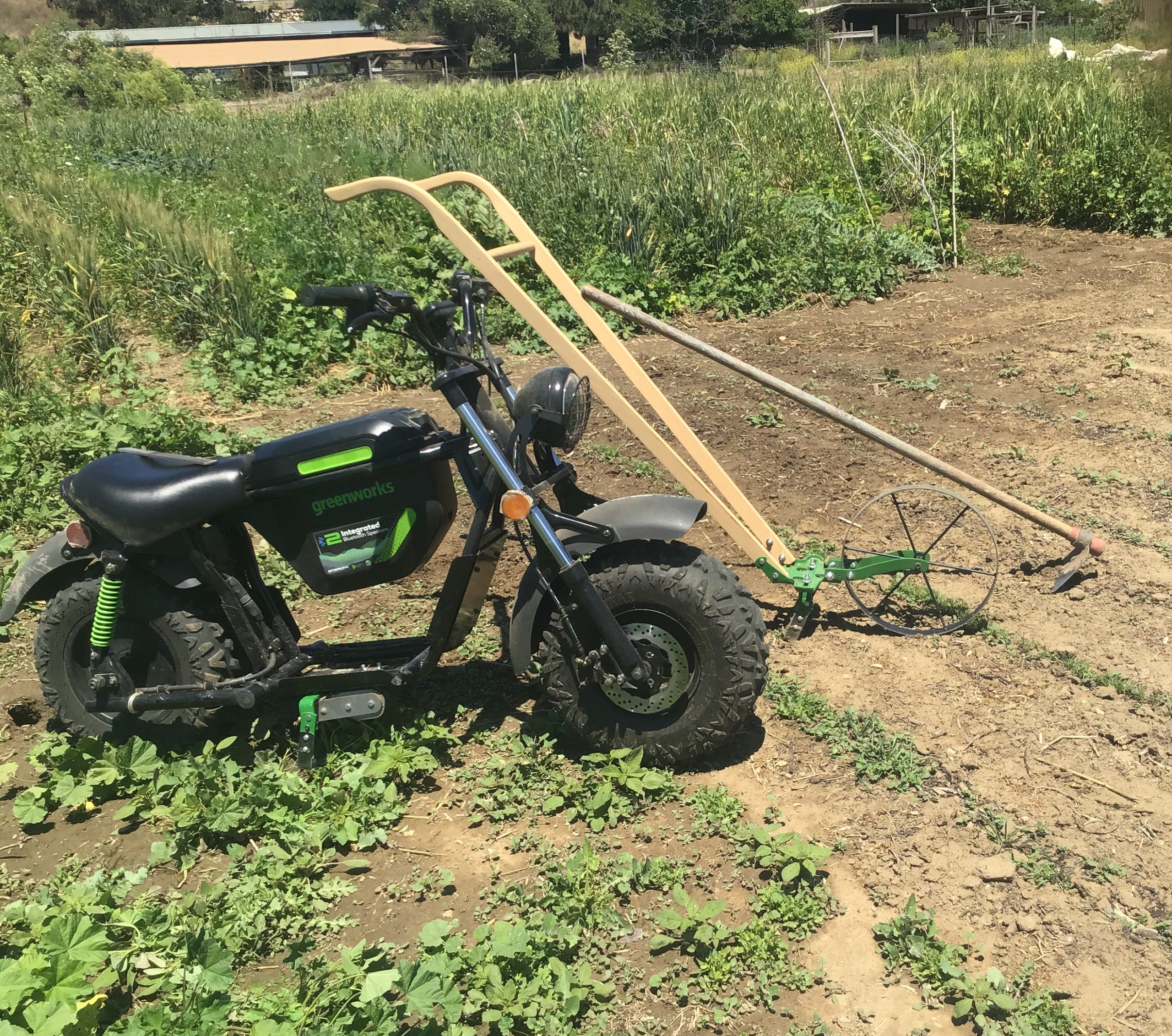 Subsistence farming tools
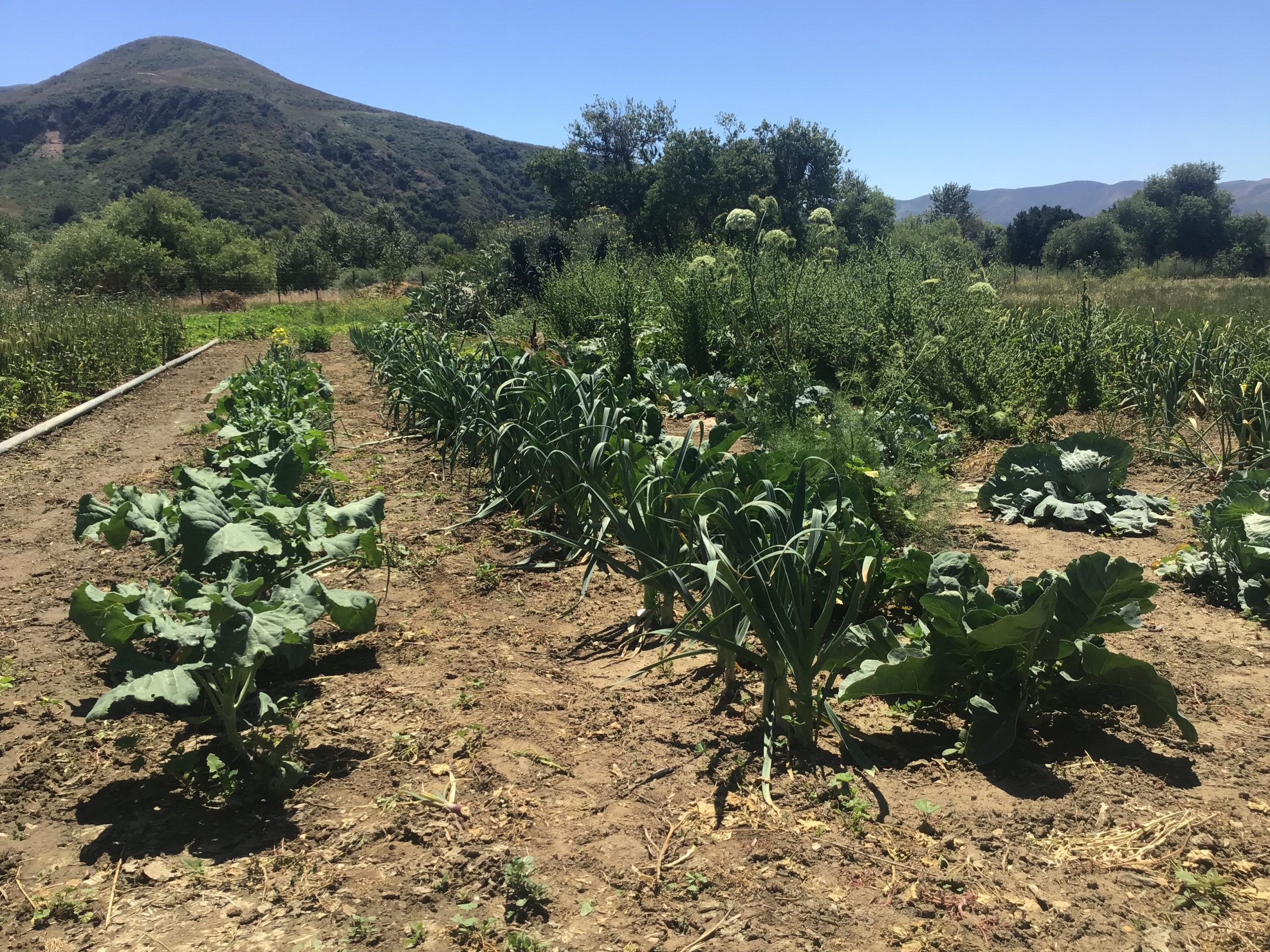 Part of Bruce’s garden May 11, 2026