Know Thy Farmer Lunch at Pico features Winfield Farm
Farm-to-table restaurant Pico Los Alamos features upscale comfort food made with local ingredients, sourced from farmers committed to organic, regenerative and humane practices. Pico owners Kali and Will are passionate about local! Each month Pico features one of their suppliers in their Know Thy Farmer lunch events. Honor beyond honors, Winfield Farm is being feted at the Know Thy Farmer event on February 7.
The Pico promotion for the event announced: WINFIELD FARM –
Mangalitsa Pigs & subsistence farming – Bruce does it all! Join us in the Pico garden for a three-course, wine-paired lunch featuring heritage Mangalitsa pigs from our friends Bruce and Diane Steele at Winfield Farm. The menu will showcase their dedication to solar energy and human powered farming.
Bruce is excited about this event “It’s great to have a restaurant that has helped support Winfield Farm for a decade,” Bruce says. “It’s nice to have friends willing to try acorns and to have an excuse to showcase the culinary potential of a primitive/minimalist experimental garden.” The lunch menu highlights foods grown at Winfield Farm.
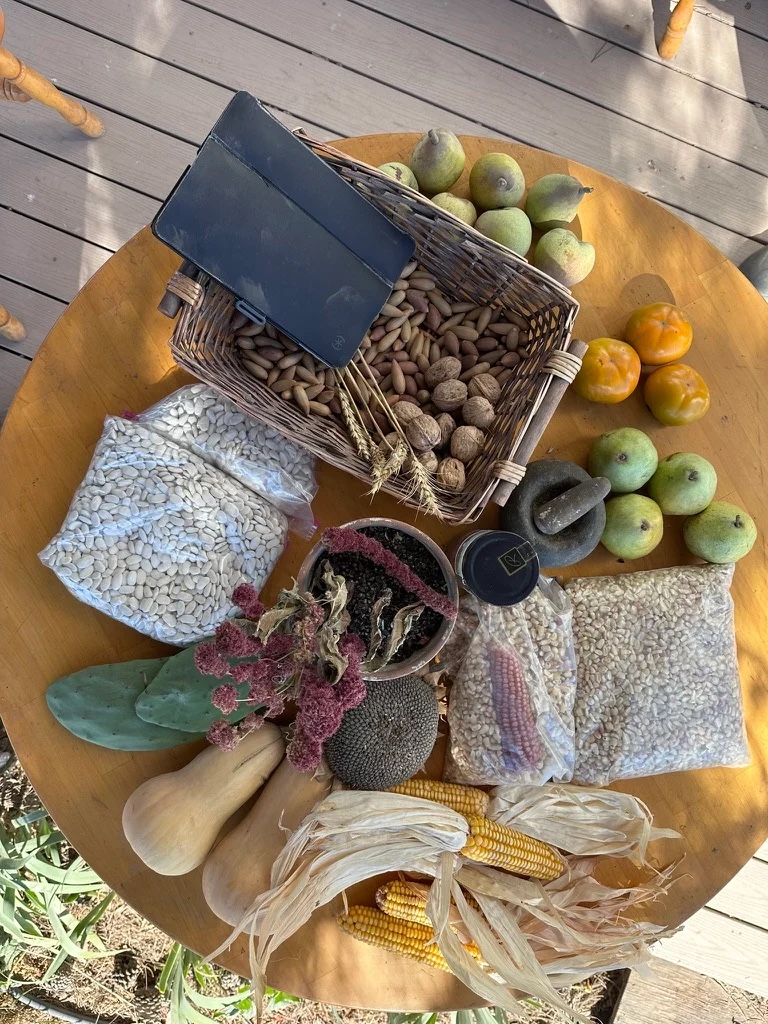
For sure, the menu that Bruce and Kali are planning is unique — 1st course: Durum/buckwheat cold soba noodles paired with 3 kinds of acorn starch “dotorimuk” with little gem lettuce and dipping sauce. 2nd course: cassoulet of tarbias beans, Mangalitsa ham hocks and kale. 3rd course: grandma’s cookbook ‘pumpkin’ pie made from butternut squash and persimmons.
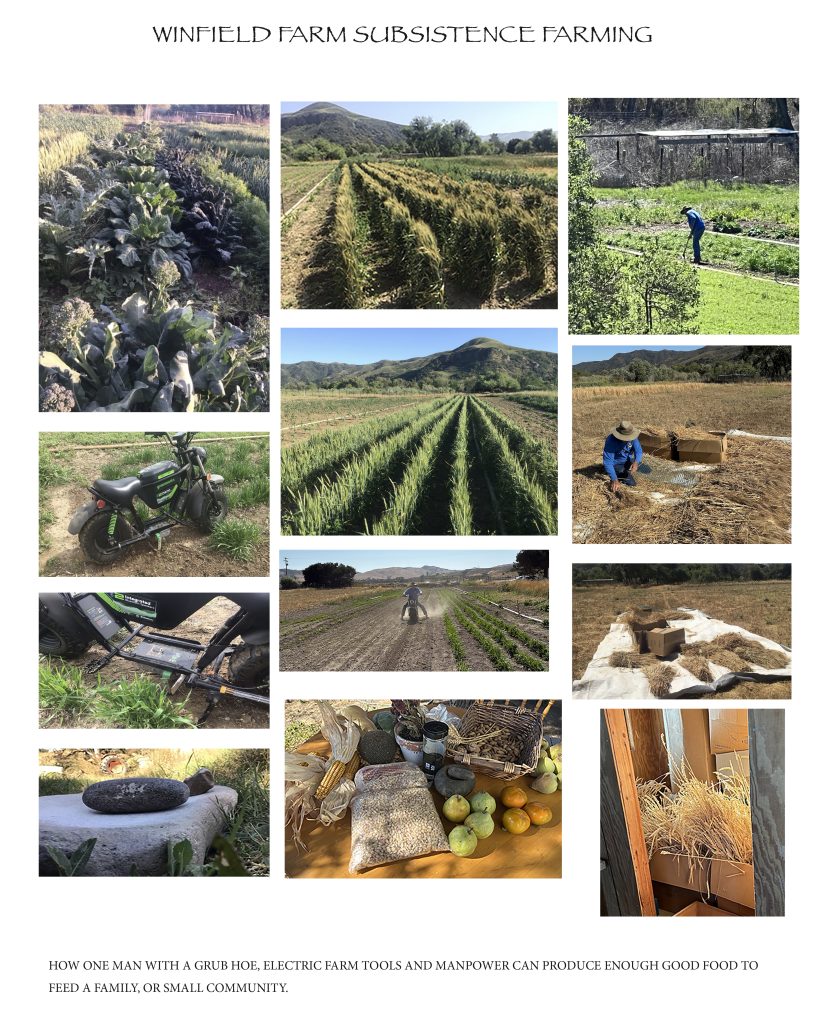
Bruce demonstrates what’s possible for one man to produce with only electric tools and manpower — using no fossil fuel. “Everything but the ham hocks was produced on our farm without fossil fuels,” he says. “The pigs have a carbon footprint.”
He continues, “[this event] gave me an excuse to make three different kinds of dotorimuk, which is likely a first for any restaurant to serve in the US, or anywhere.” The three types of dotorimuk have different colors: pink dotorimuk is from coastal live oak, a favorite of local indigenous Chumash; blond dotorimuk is from tan oak, preferred by Pomo Indians in Northern California; and the brown dotorimuk is from holm oak, the type favored by Iberico pigs on the Spanish dehesa. (Interestingly, Bruce forages for holm oak acorns nearby; Holm oaks have been planted as ornamental trees in many areas of California.)
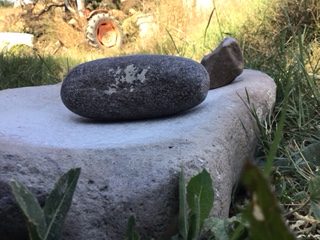
Bruce plans to set up a table with his metate, nutcracker and samples of various types of grains and their flour for a “show and tell” on Pico’s patio, greeting the sold-out party before lunch begins.
Retreat
Any land worth having was someone else’s land before you. Of course a house needs less land than a farm, and you can divide land, plant houses and write off the handprint of the farmers who tended the fields. Money isn’t everything, but as the houses got closer to the family farm, the taxes for what the farm was worth had more to do with the price of housing than the value of the crops it might produce.
Taxes went up until Grandpa had to move on and we sold. We all moved north and kept at it with cattle and alfalfa instead of oranges and lima beans. The old place had tack rooms with old harnesses hanging. There was a forge and a place to work metal, the draft stock needed shoes. A can of carbide was in the corner and we could cook up acetylene, although I was too young to start cutting metal with more than a saw. But we sharped nails with the grinding wheel and made spears.
Moving north meant the old horse drawn equipment, the steam equipment and that which was too big to truck went to scrap or over the edge into the barranca. The new equipment yard in Oregon was modern for the times, but bigger just kept getting bigger, and by the time Oregon came apart the auction was a bloodbath . We put too much faith in those machines and they really broke hearts, and still it goes on — one farm sale to the next.
Anyway I always wondered how it would be if we hadn’t mechanized, if we stepped back in horsepower towards minimalism rather than the grandiose. A hoe, maybe a couple of battery electric tools that could be replaced with something smaller and cheaper, in a pinch. But here it is, the end of expansion. Here we are and bigger is about to lose.
My time is arriving, although the auction was the end a long time ago. The old farm went down and I picked up a grub hoe. Grandpa had good advice I have tried to live by. He drove horses, fixed stationary combines, got big and got crushed. He said, “Buy water, not land. “ He said I shouldn’t expect to make any money farming. I took his advice, bought riparian water rights, a little land with it, and I have never been surprised that I didn’t make money farming. The houses are getting closer, everything else seems like it’s further away.
On the land
I guess I’m trying to prove something proven millions of times thousands of years ago.
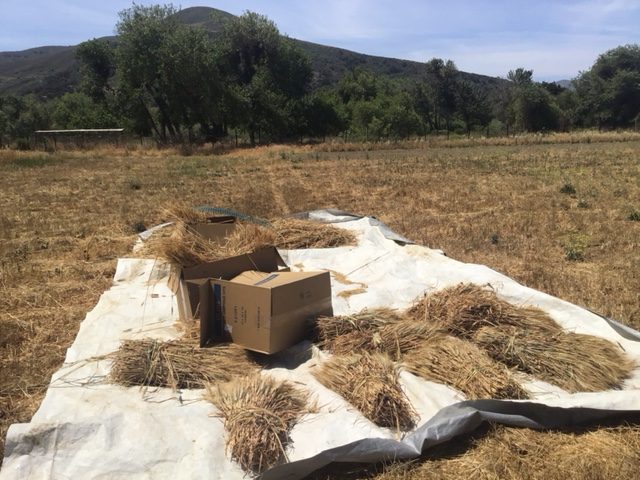
There will be villages bringing in grain again someday, but for now it’s just one old man on his hands and knees and not so romantic. I harvest with a nice sharp pair of kitchen shears. Handful by handful, I carefully place the wheat into a big cardboard box all lined up and neat so I can, one handful at a time, pull it out again to thresh. If it’s nice and neat it works better. My threshing floor is a big tarp set out in a field where it can catch lots of wind. It doesn’t rain here, so at least I have time to make it a daily half hour of work threshing and winnowing until I get through everything. Hand milling on 10,000 year old technology isn’t all that difficult, but it takes me an hour to get enough flour for one nice round loaf of bread. I haven’t timed the harvest and threshing times, but per pound they go faster than the hand milling. Harvest is time sensitive, whereas the milling can wait months, so milling can be something to while away winter hours.
I choose techniques that require zero steel. Yes, my grubbing hoe is steel, and my hand shears too, but they can both be converted back to stone, as they were in the Neolithic.
I have come to believe the quern stone was the invention that enabled civilization.
My project is to grow grain crops by hand with a hoe, but my project also involves milling the grain on a rhyolite metate that I pecked into a working form. I can mill about two cups of fine flour and another two cups of bran and semolina in an hour. The last part of the project has been capturing a sour dough starter and baking various sour dough loaves. Rye, rosemary acorn and spelt are some of the grains I have grown and used in the small loaves that I bake.
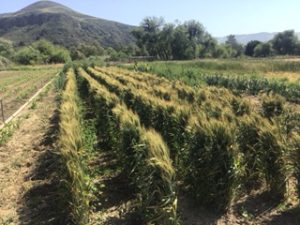
I know this has all been done before, and they tell us from such humble beginnings we built cities. Growing, threshing and winnowing fifty pounds of wheat isn’t difficult . There are plenty of crops far more fickle than wheat. My 50lb. red durum crop came off eight rows together in a thousand sq. ft. of garden space. Red durum is very productive and far easier than spelt to process into clean grain.
Milling time is a bit of a constant, like how much time it takes to hoe a given area of garden. Other chores, like dehulling grain, can be fairly quick or frustratingly slow depending on the grain you use. There is no secret technique, the hand tools are timeless: the quern, the mano, the wind.
I can tell you it’s easy, there are thousands of cultures to prove that a peasant with some seed and a quern stone can feed a family – lot of time or timeless tradition.
But we have largely forgotten making stone tools, or winnowing grain. Pecking Querns has probably always been a bit of a specialty, and farthest from a skill your digital assistant will ever help you with. Grind stones require a venture into our past, and finding your first effective quartzite hammer-stone and whacking it against another rock is a real walk into our past. Our hands remember quickly. The stone you want comes round, and another season of grains too, and the years slip away, until your work is part of what always was, like your tools and your time here on the land.

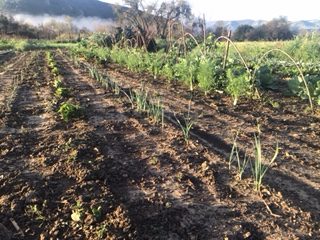
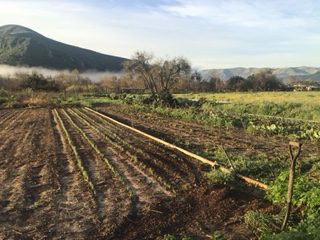
Red durum wheat in field
Growing from seed with no fossil fuel
He grew everything from seed with no fossil fuel. He’s rightly proud of his endeavor, all direct seeded and weeded with a grub hoe.
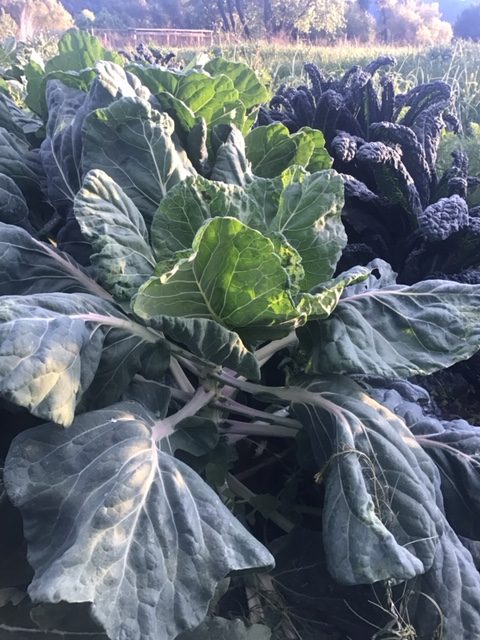
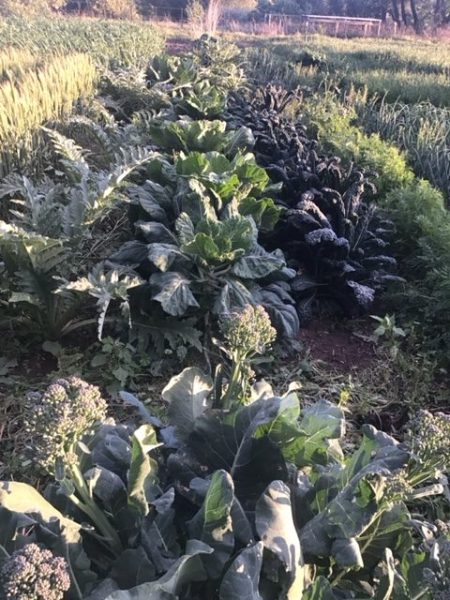
@winfield_farm is eating plenty high on the proverbial hog these days!! The afternoon sun shines light on the abundance— agriculture as art!
POTLUCK CONVERSATION
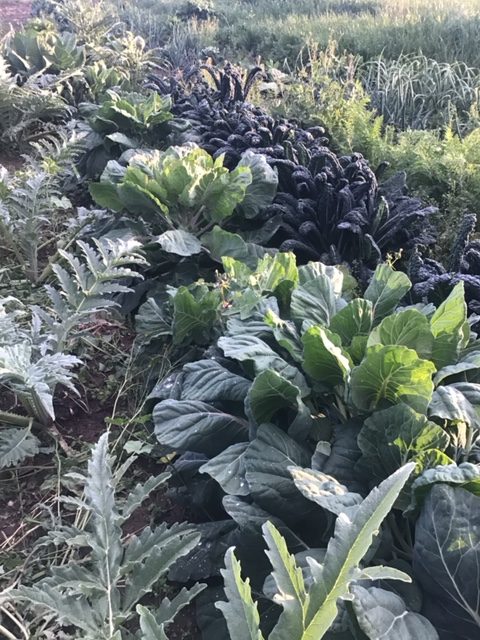
(Purple garden majesty)
I was at a potluck that several local gardeners hold where they can show off their cooking and tell stories. I was bragging about my garden and showed some photos. Another gardener asked me, “What do you do with it all? “
I had a pat answer, which is: the pigs are always eager customers. The question has lodged in my brain, however, and I keep trying to rationalize — an acre of grains, red wheat, white wheat, spelt, barley and corn, along with lots of Cole crops from the winter garden – because the “what do you do with it all “question is also a “why do you do it all,“ or at least in my head it has morphed into that.
Mostly I grow grains for dry storage, but I also try to keep two years supply in the drying shed and always keep seed for next season. I can answer “what I do” better than “why I do it,” because every season for many years, I have squirreled away the fall bounty. Finding the tools to process at very small scales is a parallel pursuit, and finding recipes are corollaries to the harvest abundance, but usually only pecking at the volumes waiting in the shed.
There is an advantage in growing grains in that they can be accurately weighed and entered in some sort of calorie ledger. “What is enough” is a valid question and it bothers me a bit, but “how much is possible” nags at me too, but in a positive kind of way.
The garden is growing very big these days, but it is spring and the winter was mild. I keep planting and so I keep increasing how much garden I need to keep cultivated. It can catch you and overwhelm you as the heat turns on, too many weeds rooted too deeply. So, you cultivate between rows at the first hint of newly germinated weed seeds. Bare ground between rows is eventually shaded by crops, but lots of cultivation while it is bare is essential.
What is possible, what tools, what seed, when to plant, those things I know. How to do it without lots of power, and again, what is possible? In that I have some confidence, borne by years and years of gardening. Still, it is a solitary pursuit and has been for most of the thousands of hours gardening in my life.
So why so much? I don’t really know, but I imagine somewhere in my gene line an answer lies. It wasn’t always a full larder, and no I can’t compensate for the distant past, but an empty belly has a very long memory, I think, or no memory at all.
Bruce
Mini bike cultivator

by Bruce Steele, originally published on Substack
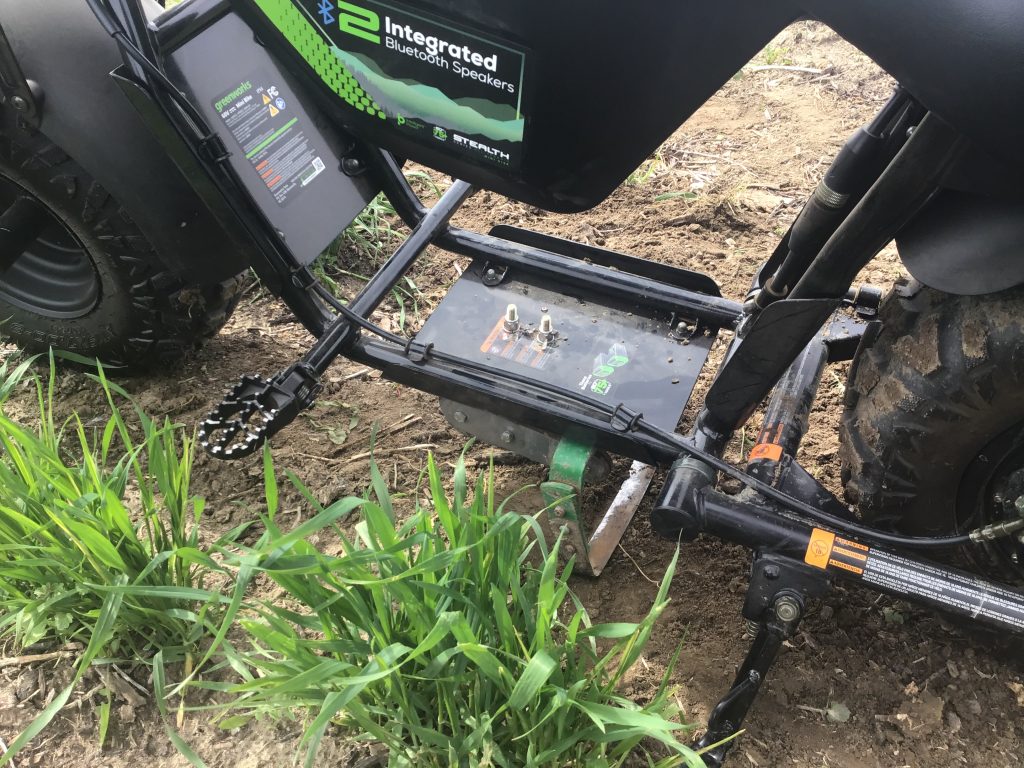
I combined an 8” hoss tools oscillating hoe with an electric mini bike. It is both fun to use and utilitarian. It is a one off and I am always happy when a google search doesn’t reveal anything similar.
This electric cultivator together with an electric tractor are the only power equipment I use to farm/ garden. My farm has had a 5.8 kW solar array for ten years and two powerwalls for a little over five years. My irrigation, refrigeration and home electric needs have been 88% solar powered for about decade . The solar and batteries have paid back the purchase price of my system . I still have grid supplied power but my electric bill averages about $30 a month .
I have been raising market pigs for the last decade and the solar system has supplied all the energy to keep my eight chest freezers operating. I will admit any transport of product or feed has been done with internal combustion . I am tired of feeding fossil fuels into trucking in a business that is not much better than break even. My farm has produced about a million dollars of pork but my days as a swineherd are dwindling.
I had a garden , a farm stand and a few years as a market gardener before the pigs came along. The pigs were initially intended to feed on all the vegetables that kept going into compost from the farm stand but they kinda took over. After a decade however I would like to restart my former vegetable stand with a goal to measure productivity of an electric farm.
How many calories can one farmer and electric tools produce? Just like my solar/ battery system paid back its purchase price with reduced electric bills how long does it take to produce enough vegetables to repay the cost of the new tools? If there is some way to calculate the embedded energy costs of producing the whole system of solar electrics and farm tools then how many food calories need to be produced to repay the embedded fossil fuel costs? These are valid questions and they have quantifiable answers.
I will be recording weights of vegetables and grains produced but farming entails cover cropping and soil building with legumes and added compost. These projects require energy and are necessary for healthy soils and productive crops. The energy expended for soil building can only be recouped with vegetables and grains produced but some accounting for the work required to maintain soil health is still necessary . Furthermore soil building and adding organics are one of the few ways we have at our access to pull atmospheric carbon back into the soil.
I do hope my project draws the attention of some agriculture college or other farmers interested in ag electrics. The tools are off the shelf available and I have a few acres to farm.
So zero fossil fuels for farm equipment, fertilizer, farm electric needs or irrigation and to the best of my abilities to avoid fossil fuel transport of production.
Winfieldfarm
Buellton Ca.