
Blog & News
Growing from seed with no fossil fuel
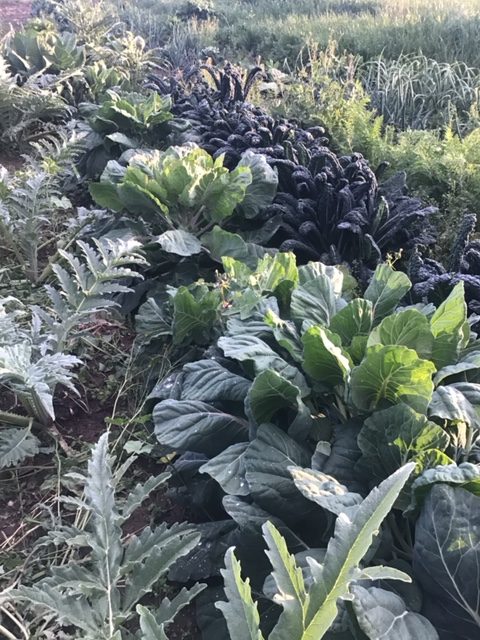
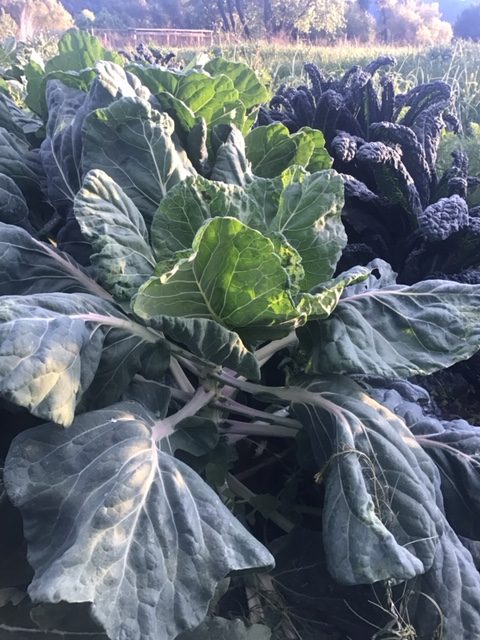
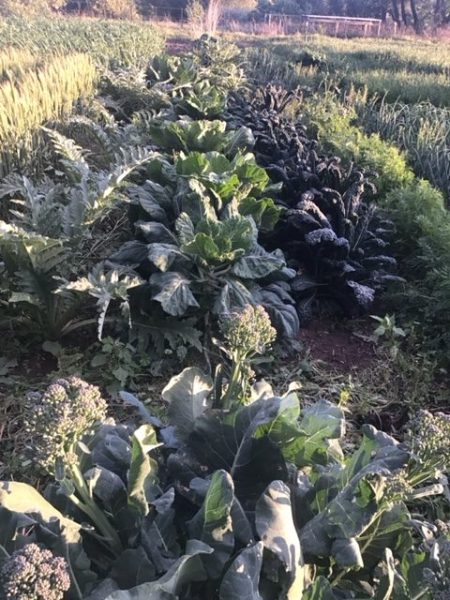
He grew everything from seed with no fossil fuel. He’s rightly proud of his endeavor, all direct seeded and weeded with a grub hoe.
@winfield_farm is eating plenty high on the proverbial hog these days!! The afternoon sun shines light on the abundance— agriculture as art!
POTLUCK CONVERSATION
(Purple garden majesty)
I was at a potluck that several local gardeners hold where they can show off their cooking and tell stories. I was bragging about my garden and showed some photos. Another gardener asked me, “What do you do with it all? “
I had a pat answer, which is: the pigs are always eager customers. The question has lodged in my brain, however, and I keep trying to rationalize — an acre of grains, red wheat, white wheat, spelt, barley and corn, along with lots of Cole crops from the winter garden – because the “what do you do with it all “question is also a “why do you do it all,“ or at least in my head it has morphed into that.
Mostly I grow grains for dry storage, but I also try to keep two years supply in the drying shed and always keep seed for next season. I can answer “what I do” better than “why I do it,” because every season for many years, I have squirreled away the fall bounty. Finding the tools to process at very small scales is a parallel pursuit, and finding recipes are corollaries to the harvest abundance, but usually only pecking at the volumes waiting in the shed.
There is an advantage in growing grains in that they can be accurately weighed and entered in some sort of calorie ledger. “What is enough” is a valid question and it bothers me a bit, but “how much is possible” nags at me too, but in a positive kind of way.
The garden is growing very big these days, but it is spring and the winter was mild. I keep planting and so I keep increasing how much garden I need to keep cultivated. It can catch you and overwhelm you as the heat turns on, too many weeds rooted too deeply. So, you cultivate between rows at the first hint of newly germinated weed seeds. Bare ground between rows is eventually shaded by crops, but lots of cultivation while it is bare is essential.
What is possible, what tools, what seed, when to plant, those things I know. How to do it without lots of power, and again, what is possible? In that I have some confidence, borne by years and years of gardening. Still, it is a solitary pursuit and has been for most of the thousands of hours gardening in my life.
So why so much? I don’t really know, but I imagine somewhere in my gene line an answer lies. It wasn’t always a full larder, and no I can’t compensate for the distant past, but an empty belly has a very long memory, I think, or no memory at all.
Bruce
Mini bike cultivator
by Bruce Steele, originally published on Substack
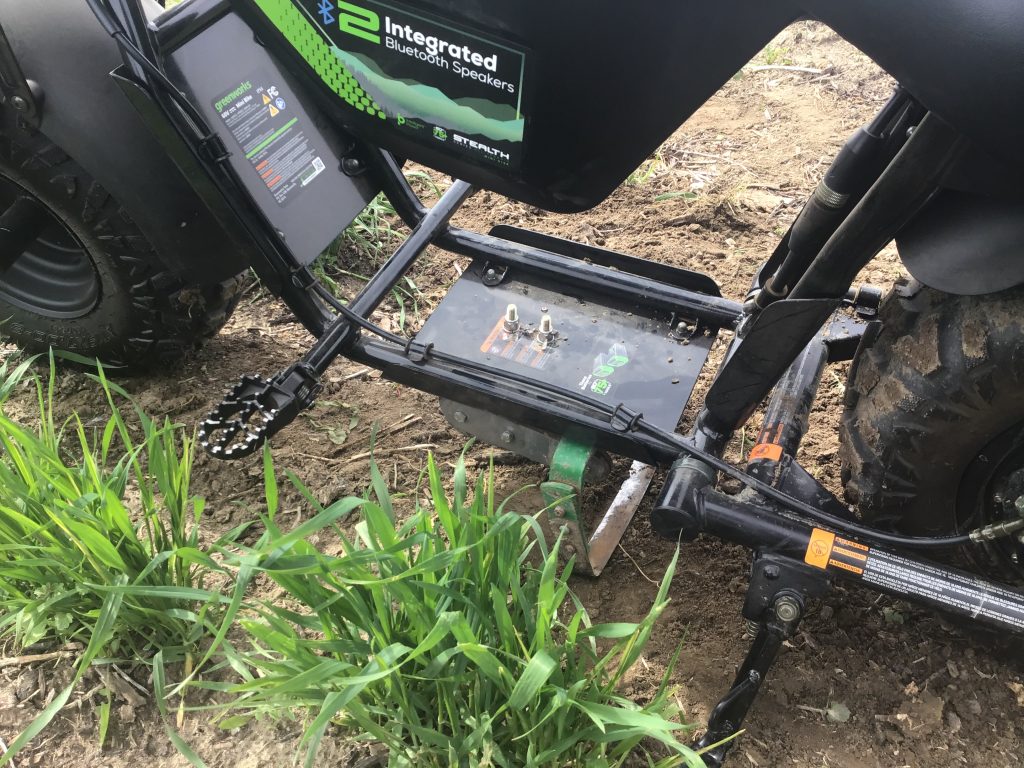
I combined an 8” hoss tools oscillating hoe with an electric mini bike. It is both fun to use and utilitarian. It is a one off and I am always happy when a google search doesn’t reveal anything similar.
This electric cultivator together with an electric tractor are the only power equipment I use to farm/ garden. My farm has had a 5.8 kW solar array for ten years and two powerwalls for a little over five years. My irrigation, refrigeration and home electric needs have been 88% solar powered for about decade . The solar and batteries have paid back the purchase price of my system . I still have grid supplied power but my electric bill averages about $30 a month .
I have been raising market pigs for the last decade and the solar system has supplied all the energy to keep my eight chest freezers operating. I will admit any transport of product or feed has been done with internal combustion . I am tired of feeding fossil fuels into trucking in a business that is not much better than break even. My farm has produced about a million dollars of pork but my days as a swineherd are dwindling.
I had a garden , a farm stand and a few years as a market gardener before the pigs came along. The pigs were initially intended to feed on all the vegetables that kept going into compost from the farm stand but they kinda took over. After a decade however I would like to restart my former vegetable stand with a goal to measure productivity of an electric farm.
How many calories can one farmer and electric tools produce? Just like my solar/ battery system paid back its purchase price with reduced electric bills how long does it take to produce enough vegetables to repay the cost of the new tools? If there is some way to calculate the embedded energy costs of producing the whole system of solar electrics and farm tools then how many food calories need to be produced to repay the embedded fossil fuel costs? These are valid questions and they have quantifiable answers.
I will be recording weights of vegetables and grains produced but farming entails cover cropping and soil building with legumes and added compost. These projects require energy and are necessary for healthy soils and productive crops. The energy expended for soil building can only be recouped with vegetables and grains produced but some accounting for the work required to maintain soil health is still necessary . Furthermore soil building and adding organics are one of the few ways we have at our access to pull atmospheric carbon back into the soil.
I do hope my project draws the attention of some agriculture college or other farmers interested in ag electrics. The tools are off the shelf available and I have a few acres to farm.
So zero fossil fuels for farm equipment, fertilizer, farm electric needs or irrigation and to the best of my abilities to avoid fossil fuel transport of production.
Winfieldfarm
Buellton Ca.
From Gourmet Pork to Subsistence Farming
Why Buellton’s Winfield Farm Will Stop Raising Mangalitsa Pigs in Favor of Sheer Survival
By Matt Kettmann | Photos by Macduff Everton
Originally published in The Santa Barbara Independent, January 9, 2025
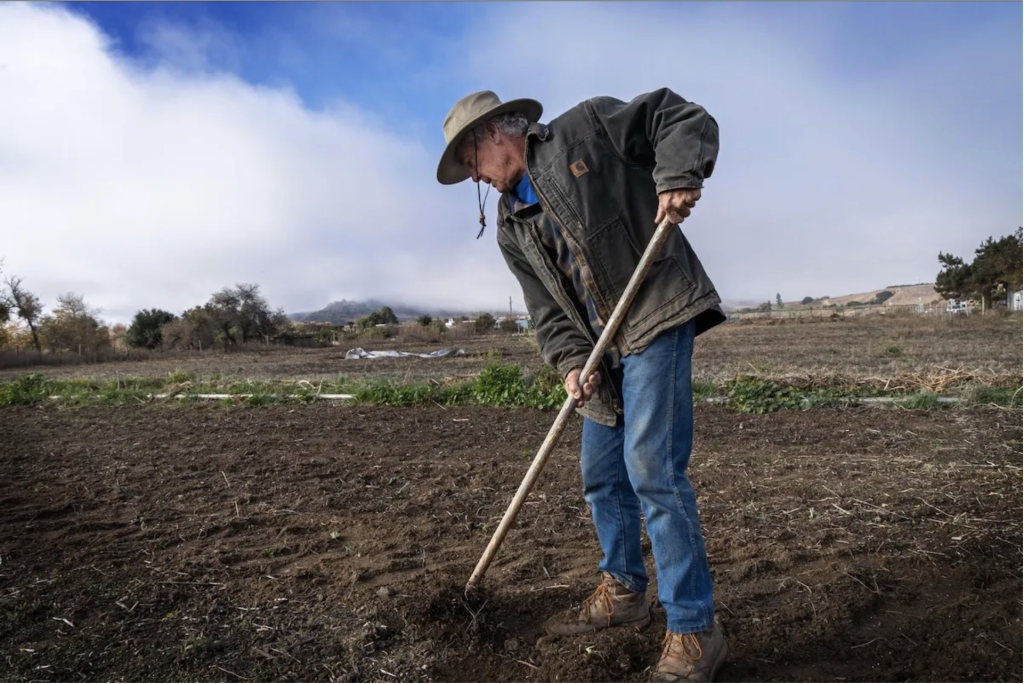
Buellton, California; Bruce Steele, with his hoe in vegetable garden, Winfield Farm | Credit: Macduff Everton
At a time when supporting honestly raised, regionally grown, sustainably minded food is on the lips of every self-respecting restaurant lover, why is it essentially impossible to make a stable living off of working the land?
In the case of one Buellton farm, which rose to prominence raising the exact kind of gourmet pork that source-conscious chefs seek out, the rigamarole of regulations combined with high costs and low market prices is forcing them out of the pig business. Instead, they’re shifting to subsistence farming as a model for survival, exploring how harvests of buckwheat, barley, amaranth, acorns, spelt, squash, corn, cactus, and many other crops can support modern human existence.
“This is not just my story,” said Bruce Steele, who owns Winfield Farm with his wife, Diane Pleschner-Steele, together raising the country’s largest registered breeding herd of swallow-belly Mangalitsa pigs for more than a decade. “It’s all of us.”
Over the next few months, they’ll be winding down operations, selling off the last of their once-celebrated chops, ribs, and sausages to restaurant chefs and home cooks. Similar woes are being felt all across California, from the nearby Motley Crew Ranch — which just opened a meat market in Buellton but is no longer raising large animals — to J&R Natural Meats, which shut down its two Paso Robles butcher shops last year, and the famed Llano Seco Meats in Chico, which closed in 2023 after 162 years of selling to top restaurants.
“What has happened is that human technological and physical infrastructures for regional food systems have essentially disappeared,” explained Shakira Miracle of the Santa Barbara County Food Action Network (SBCFAN). “Our small-scale producers are the ones who are suffering.” She’s been working with farmers on potential remedies for their compounding woes since 2021, and hopes to open Lompoc’s federal prison as a new regional processing site in 2026.
That’s already too late for Winfield Farm. “This doesn’t work,” lamented Bruce on the porch of his drying shed one morning last fall as bright sunshine recharged the solar-powered property. “Nothing you can do will ever work,” he continued, to which Diane added the caveat, “in California.”
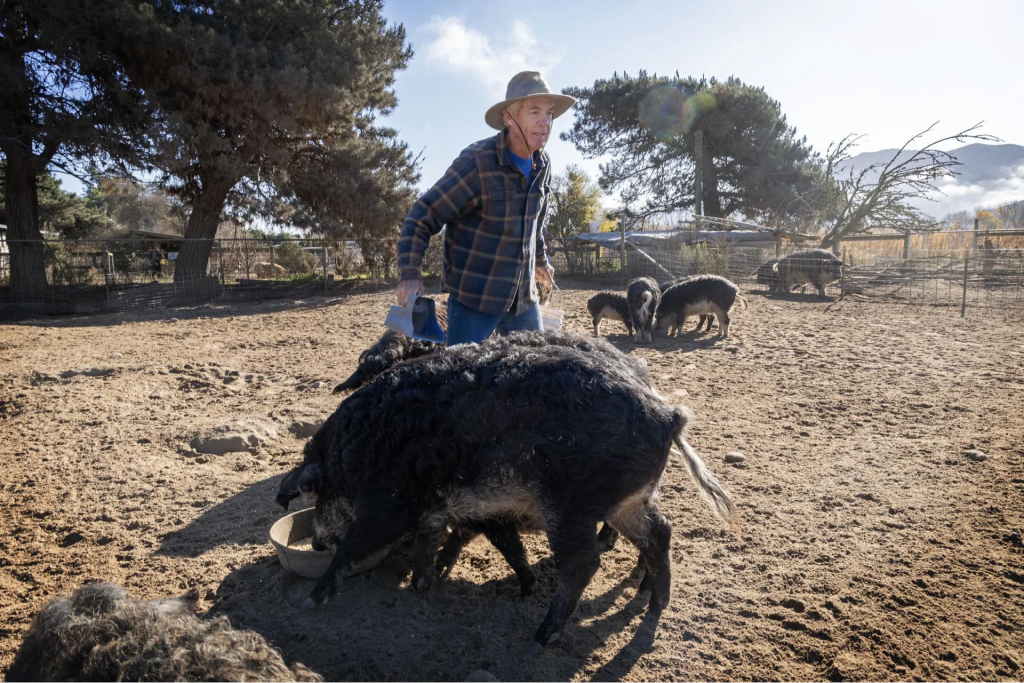
Winfield Farm’s Bruce Steele feeds some of his remaining Mangalitsa pigs. | Credit: Macduff Everton
Bruce’s farming saga goes back to the 1860s near Moorpark, where generations of his family tended beanfields that evolved into orange groves. When he was at Camarillo High, he’d visit his grandparents and extended family in Oregon, where they’d moved to raise cattle and alfalfa while practicing plenty of traditional food preservation techniques.
“They were all babies of the Depression,” said Bruce, who is 70 years old. “That had a huge mental impact on those who went through that time.”
He enjoyed the lifestyle, especially gardening with his Aunt Shirley. “I always wanted to be a farmer — that was maybe my first mistake,” he laughed. “My grandfather said, ‘If you ever want to make any money, don’t do this! If you buy land, buy water!’ ” (It’s no coincidence that Winfield Farm has riparian water rights along the Santa Ynez River.)
But Bruce also loved fishing, and marine biology classes led him to pursue hard-hat diving as a career, originally intent on working the deepwater oil rigs. No one took him seriously at 18 years old, so he wound up back in Ventura County, settling into life as an urchin diver in 1973.
The route from his house in Camarillo to Anacapa Island and back was easy, and he’d stash away $100 a day after
covering his current and future expenses, selling urchin for 8 cents a pound. (Today, the popular spiny treats can fetch $10 a pound.)
“It was like a banker’s hours!” he exclaimed. He kept at it after moving to Santa Barbara in 1976, building a life and well-known garden on the Mesa, and was still diving for urchin regularly until about a decade ago.
“In my heart, I’m still an urchin diver,” said Bruce, who was a major player in the development of the rules and zones that govern fishing today. “I still have a permit.”
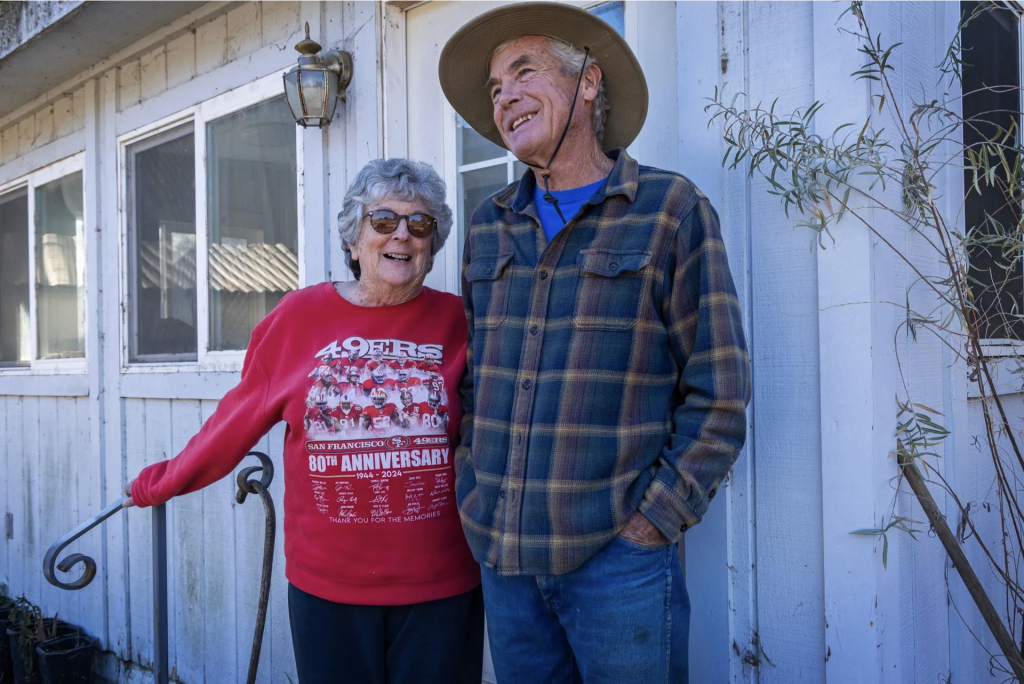
Diane Pleschner-Steele and Bruce Steele outside of their home. | Credit: Macduff Everton
In 2000, he used urchin income to purchase 30 flat, occasionally flooded acres between the Santa Ynez River and Highway 246, just west of Buellton, and named it Winfield Farm after his dad’s middle name. Bruce and Diane — who worked for two decades as the head of the nonprofit California Wetfish Producers Association — started farming a wide variety of common row crops like tomato, melon, and squash, selling them at their farmstand every summer.
The farm generated a massive amount of compost, which is where the pigs come in, as they’re ideal for eating such scraps. But not just any pigs: the almost-extinct Mangalitsa breed from Hungary, discovered after the Iron Curtain fell with only around 100 pigs remaining.
Like the Ibérico breed of Spain — whose jamonistas are credited with rediscovering and restoring the Mangalitsas — these pigs produce incredibly marbled, intensely flavorful meat. “They’re the only pigs other than Ibérico that can be called pata negra,” said Diane of the top-shelf “black foot” designation animals, which Bruce feeds a special malted barley spiked with chestnut powder. “If you feed tannins to these pigs, it changes the fat composition,” he said of such nut powders, citing recent research out of Serbia.
Winfield Farm welcomed its first swallow-bellied Mangalitsas in 2013, and the herd grew exponentially in size, reaching about 120 at peak pig. Many restaurants were buying the meat, particularly the late Jeff Olsson of Industrial Eats as well as, on occasion, Barbareño, Barrelworks, and Chef Cameron Ingle when he was at Pico in Los Alamos. (Today, Niner Wine Estates in Paso Robles is the most dedicated buyer.) The Ritz-Carlton Bacara’s chef at the time was also a steady customer, and that’s where Bruce was planning to supply pork for an event about eight years ago when he got a standard inquiry about his liability insurance.
He quickly learned that California regulators frowned on farms that raise both vegetables and pigs. “Pigs and vegetables?” they told him. “You’re canceled!”
According to Bruce, the issue goes back to an E. coli outbreak in the Salinas Valley. “No one really knows what happened,” he said. “But they blamed the pigs.”
Such concern makes sense on the industrial farming scale, but applying such broad regulations to a tiny farm that only sold produce to neighbors? Bruce and Diane felt like unintended targets. It wouldn’t be the last time.
Suddenly, since pork made marginally more income than vegetables, Winfield Farm was out of the veggie business.
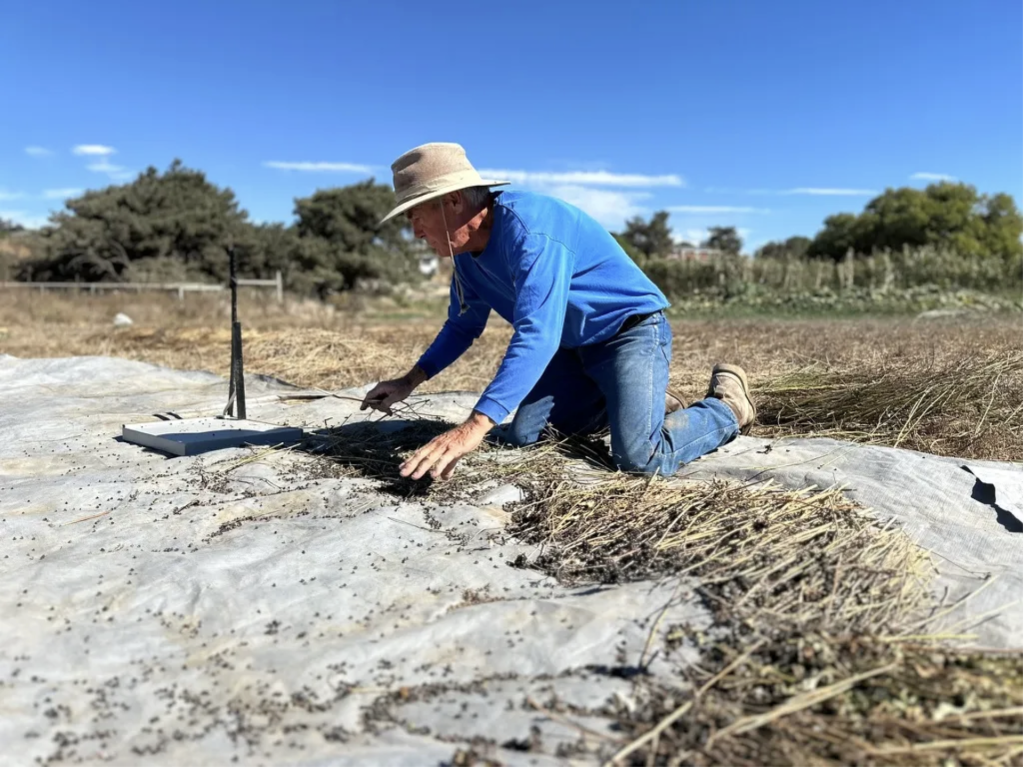
Bruce Steele threshes buckwheat in the middle of Winfield Farm. | Credit: Macduff Everton
Meanwhile, the pork business got harder. COVID killed restaurants for a time, although the direct-to-consumer market briefly exploded. The war in Ukraine, which was a major global supplier of grain, caused feed prices to skyrocket, doubling Winfield Farm’s cost from around $30,000 a year to more than $60,000. Said Bruce, “You can’t just double the price of your already expensive meat.”
Problems arose close to home as well. “Ultimately, my butcher quit,” said Bruce of when the primary Central Coast butchery service, J&R Natural Meats in Paso Robles, shut down operations last year.
That loss triggered processing problems all across the regionally raised meat realm, although the recent opening of Sinton & Sons in J&R’s place should bring a bit of relief for some ranches. Pigs, however, remain particularly challenging — even more so for Winfield’s large, hairy Mangalitsas, which require special equipment. Unlike many other states, which allow pork to be distributed so long as it’s processed according to each state’s health codes, California regulations require pork to attain federal health standards before being sold broadly.
The U.S. Department of Agriculture (USDA) rules are onerous since they’re aimed at industrial pig farms, but Bruce and Diane feel like they don’t make much sense for small farms like theirs. He said that this is the one law that, if changed to allow state-level approval before distribution, could potentially save California’s small pig farmers.
Instead, the route from Winfield Farm to a plate for this Mangalitsa meat runs from Buellton to Fresno, where the animals can be sparged, all the way down to Glendale, where the USDA-certified Schreiner’s Fine Sausages handles the bacon, ham, sausage, and other smoked meat products. (Smoking is even more highly regulated.) Such transportation is expensive and not very eco-efficient, undermining the critical argument for buying local.
On top of that, California voters in 2018 passed an animal welfare proposition to clean up factory-sized meat operations. The new rules about spacing — which finally went into effect last year after much legal wrangling — didn’t impact operations at Winfield Farm at all, but still created costly confusion and a bunch more hoop-jumping for small farmers. Not only that, but Bruce said that the proposition’s main point of keeping animals out of cages was ultimately relaxed anyway.
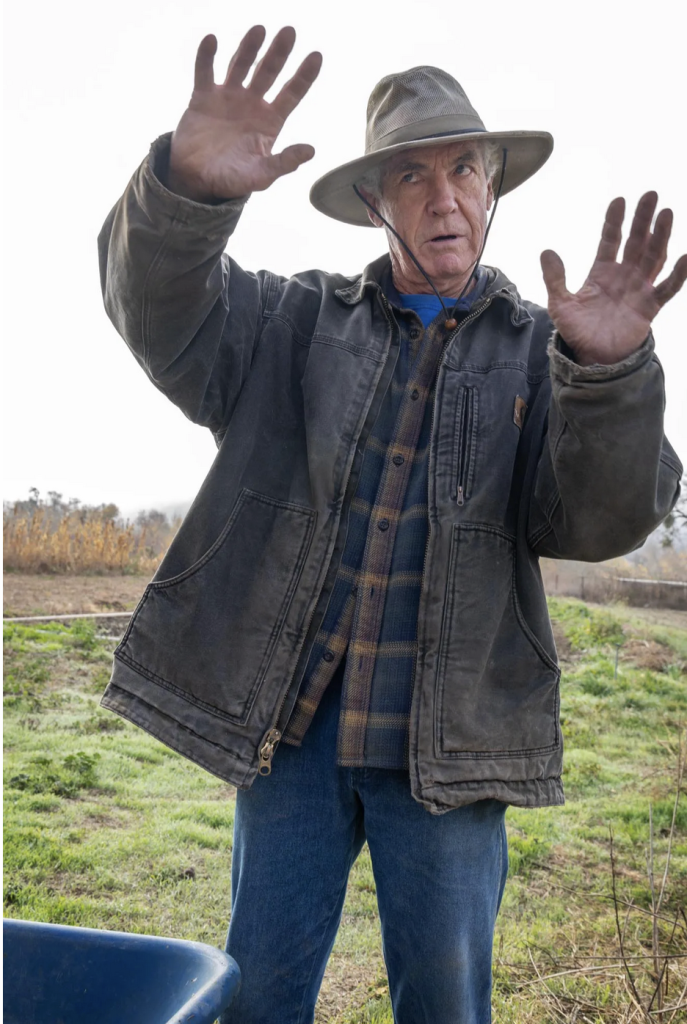
Pig farmers like Bruce Steele go a bit cross-eyed when navigating the web of regulations. | Credit: Macduff Everton
“The bottom line is that it didn’t change anything on my farm,” said Bruce. “It’s paperwork that serves no purpose, developed by a bunch of well-meaning people who didn’t have any idea of what the pig business was about.”
“We are also getting out of the pig business,” said Marko Alexandrou of Motley Crew Ranch, located just a few miles west of Winfield Farm on Highway 246. “Until we have a legal slaughter facility in Santa Barbara County, I refuse to continue raising large animals. It’s unfair and inhumane to have to drive them two to three hours north for harvest, saying nothing about the carbon footprint.”
Marko and his wife, Cassidy Alexandrou, have also grappled with the effects of Prop. 12, which they say are burdening small farmers while massive operations have a “free pass” to raise animals under those controversially confined conditions. “Our pigs have so much space that the law is irrelevant, but I still have to register and have someone from the state come by and tell me that my five pigs are okay on five acres,” said Marko.
SBCFAN’s Miracle said that Prop. 12 is a great example of good intentions leading to lots of unintended consequences. “People meant well, but because people are increasingly disconnected from where their food comes from, they do not understand that we have regional producers of crops, seafood, and meats, and then we have this catastrophically different scale of centralized industrial agriculture,” she explained. “It’s the difference between commodifying food, and growing, catching, and raising food that’s going to add net benefits to your health and wellness, to the community, and to the net economy.”
That these distinct versions of agriculture receive the same treatment is baffling for her and so many. “Santa Barbara County, with all its uniqueness, is just a recipe for what is best for us in terms of what we can do with food,” said Miracle. “The challenge is that we need more county, state, and federal lining up on the regulatory side so they’re not contradicting one another.”
When asked about these concerns via email, the state sent back a fairly canned response, and did not respond when emailed follow-up questions. Steve Lyle, the California Department of Food and Agriculture’s director of public affairs, explained that the mission of the state’s Animal Care Program is “to serve animal agriculture producers and California consumers by promoting and protecting the welfare and care of animals in agriculture in order for Californians to have access to food that is sourced from humanely and sustainably raised animals.” And to do that, Lyle said, “All farms are held to the same standards.”
So instead of larger animals, Motley Crew — which just opened a meat market in Buellton after spending $200,000 and 18 months to do so — is sticking to poultry and rabbits, both of which can be legally harvested on the farm and sold direct-to-consumer. “Everyone wants local, organic, regenerative meat, but the reality is that California makes that really hard, and Santa Barbara County makes it nearly impossible,” said Marko. Like Steele, he believes California should allow state rather than federal rules to dictate allowing processing here, and that regulations should be relaxed for tiny ranches such as his.
“The likelihood of those things happening is minimal,” he admitted. “We’ve been advocating for it for 10 years, others longer. The money, the space, and the will are there, but the regulatory process is not.”
The one glimmer of hope on the horizon is opening the federal prison in Lompoc as a USDA-certified meat processing facility. The current push for this came out of a working group that SBCFAN called together in August 2021, though the process has taken a lot more time than most involved assumed.
The prison’s vocational training programs long included butchering courses, and Lompoc once provided meat to many other prisons in the system. That shifted when dairy became more popular, but now there is a willingness to reinvigorate the meat processing facility and make it available to regional ranchers as well.
“We are now in the process of finishing the pre-development of this enterprise, which we hope to launch in 2026,” said Miracle, who needs to raise about $4 million to pay for the final costs. “If we are able to raise the capital needed to finish up the facility, we will launch sooner.”
The plan is not only to open the facility for processing beef and pork, but to also build a network of supply chains so that ranchers can more easily sell their meat into the market as well. “From there, on day one, we will be able to offer USDA-certified beef and pork processing,” said Miracle. “That’s a game-changer for a lot of reasons.”
For Winfield Farm, though, the writing was already covering the walls. “Every single thing is expensive to do here,” said Bruce, noting higher wage and fuel costs than other states. “Restaurants won’t pay you what it costs to do this.”
It was time to ditch the pigs.
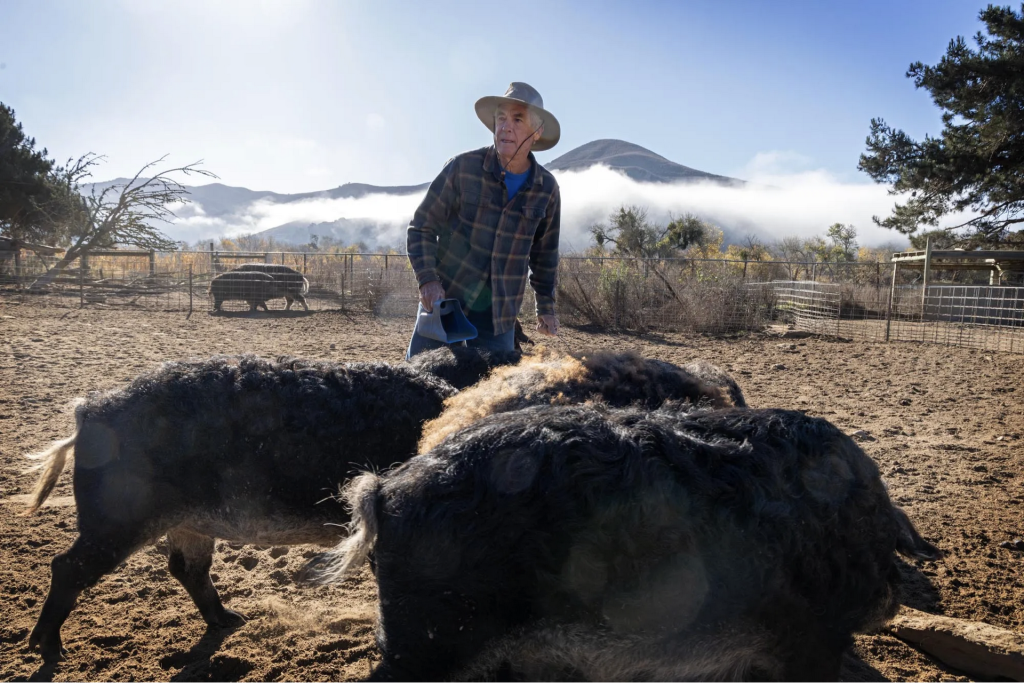
Buellton, California; Bruce Steele feeding his pigs, Winfield Farm | Credit: Macduff Everton
Bruce and Diane’s interest in subsistence farming goes back to before COVID. On one New Year’s Eve, he told her that they’d do “The Challenge,” which involves living off of their own land and not going to the store for an extended period of time. They made it a month, and that was without any proper planning. They ate a lot of eggs and acorns.
He started exploring the crops needed to do it for a longer stretch, planting grains, more fruits, and hearty vegetables that last longer on their shelves. He’s learning how to grow and process each of them — farming more than a half-acre all by himself, mostly with a rusty hoe — and, perhaps most importantly, how to turn them into food.
“If you can’t figure out how to cook it and make it taste good,” they both agreed, “you’re wasting your time.”
He’s learned to use the wind to winnow white-blossomed buckwheat, that “you need to crush the hell out of” spelt, and that one ear of corn amounts to a batch of cornbread. A later attempt at The Challenge lasted about three months, but they’re preparing to go all in, even though they admit the cuisine can become a little bland. (I suggested more hot and pickled peppers.)
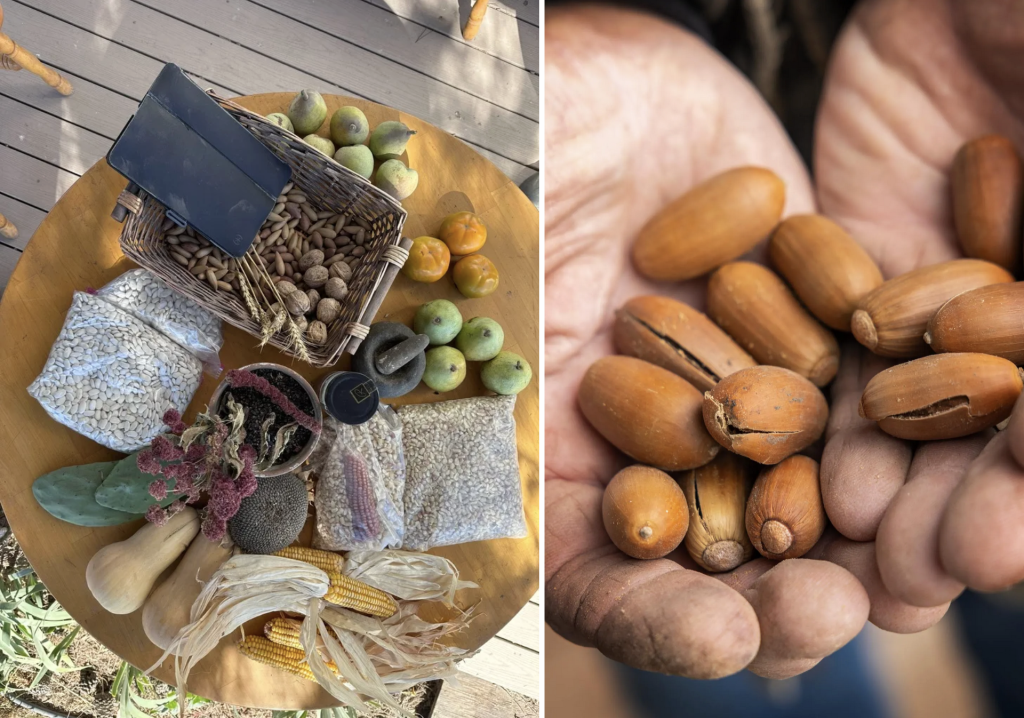
Left: A bounty of subsistence crops. Right: Acorns are on the menu. | Credit: Matt Kettmann; Macduff Everton
“We’re on the verge of doing it right now,” said Diane, explaining that they’re dining subsistence-style “almost every night.” The night before I visited, for instance, they ate a tomato and cassoulet bean soup with pork meat, followed by a squash pie for dessert.
The whole project — from a solar-powered tractor to the gritty handwork to the knowledge unleashed in ancient grains to using every part of their land to survive — struck me as fascinating, perhaps only eclipsed by the fact that no one seems to care. When I asked if Bruce had any acolytes out at Winfield Farm learning these ways, their response was blunt and disheartening: “No one wants to know.”
Diane’s dream is to document what Bruce is up to, while he would like to see more farmers use his land to explore similar crops and invest in the wisdom they offer. Said Bruce, “It’s gonna matter.”
But Winfield Farm pork is not dead yet. They still have about four months of meat to process and sell, which anyone can buy straight from the farm. To do so, visit winfieldfarm.us.
Editor’s Note: An earlier version of this article ran in November 2024 in Full Belly Files, Matt Kettmann’s weekly food & drink newsletter. Read that version here and sign up for his newsletter here.
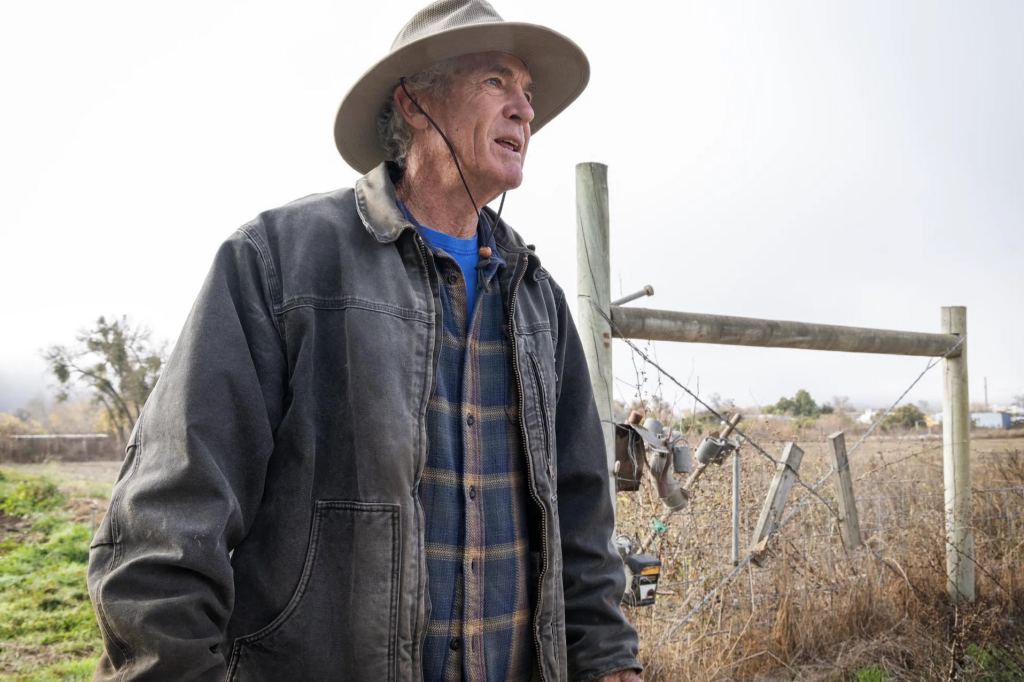
Buellton, California; Bruce Steele, Winfield Farm
We’re Delighted to Announce: We’ve Got HAM!
Thanks to our new association with Schreiner’s Fine Sausage in Glendale, we’re now able to produce Smoked Boneless Mangalitsa Ham!
We’re offering Winfield Farm Mangalitsa ham in two styles:
The specialty of the house:
Boneless Mangalitsa Black Forest Brand Ham
Shreiner’s dips boneless Mangalitsa ham in caramel #29 to produce an amazingly succulent, flavorful treat!
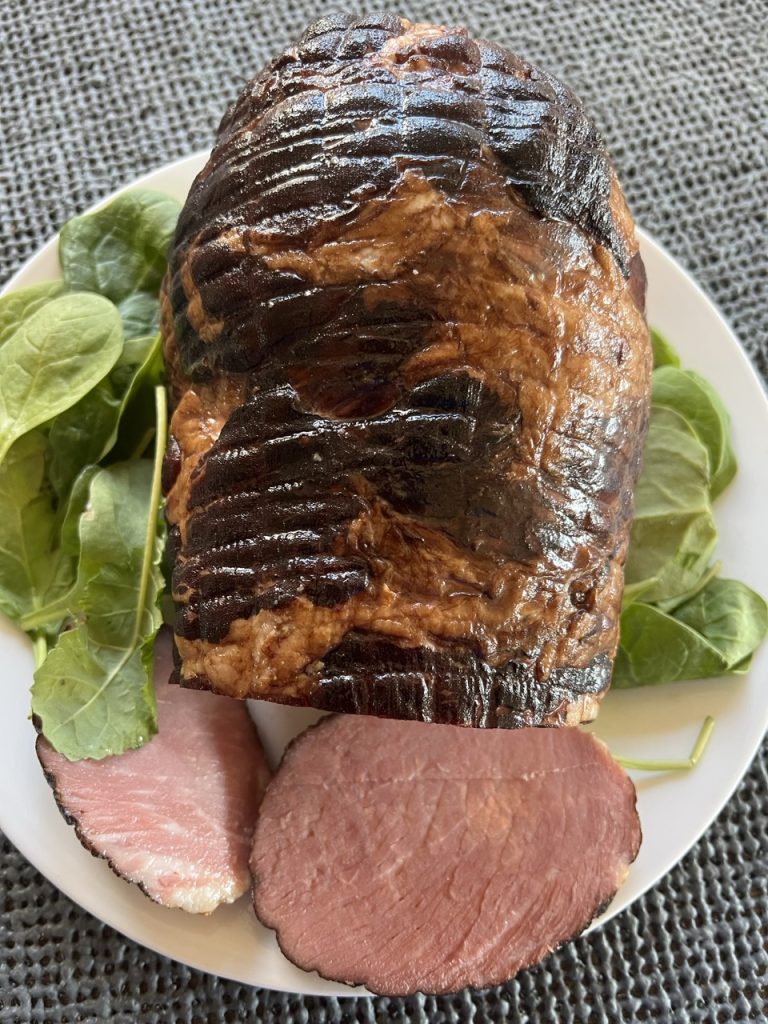
Get 4, 5, or 6 pound packs (Price $23 / pound) now from our limited supply of Mangalitsa Black Forest Brand ham at our online market.
We’re also offering:
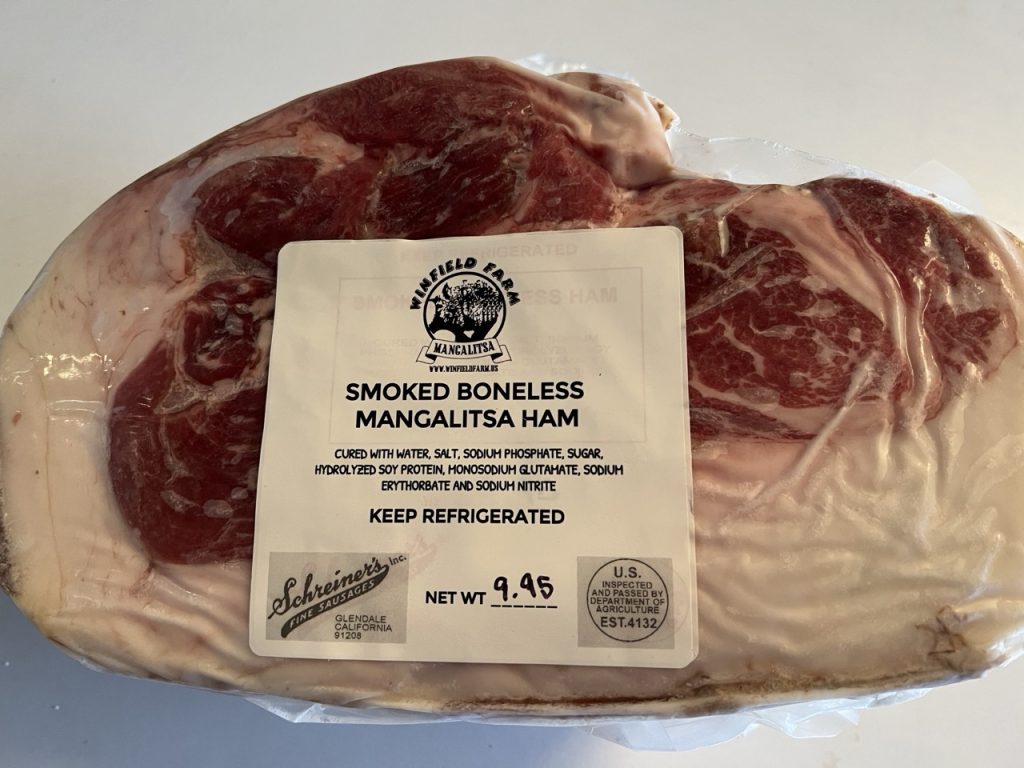
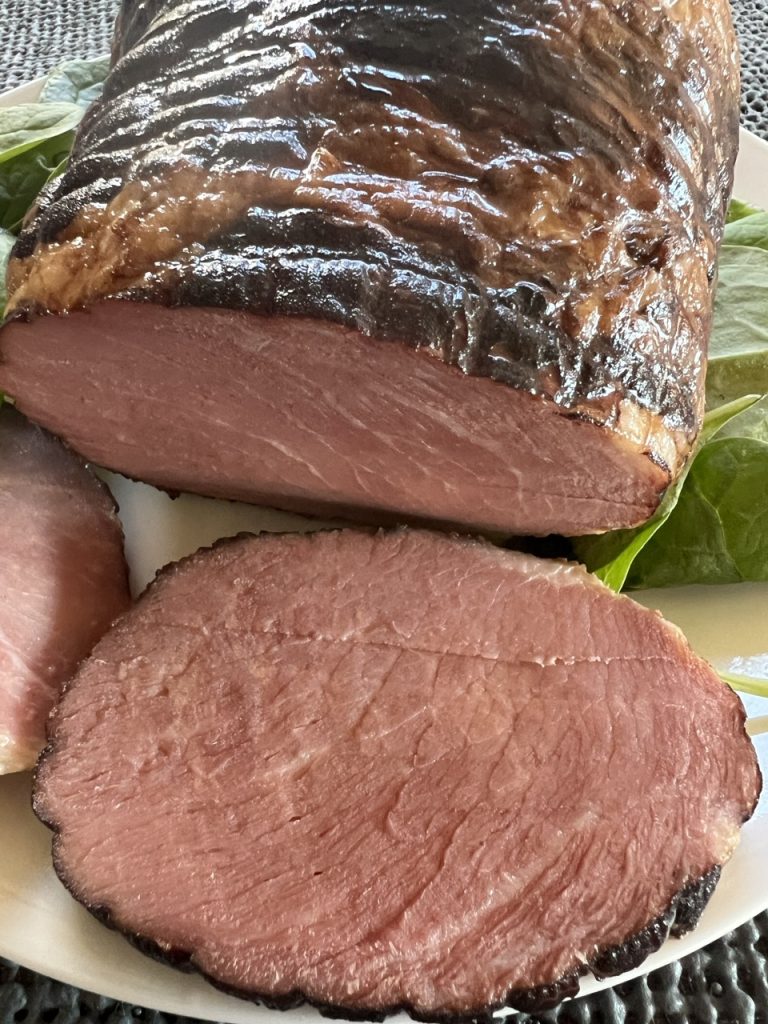
Smoked Boneless Mangalitsa ham
Get 5 or 10 pound packs (Price $18 / pound) of Smoked Boneless Mangalitsa ham now at our online market.
#####
ANNOUNCING A NEW “PARTNERSHIP” and A NEW PRODUCT (with more to come!)
Our hunt for a USDA certified smokehouse that could process our Mangalitsa bellies into hickory smoked bacon led us to Schreiner’s Fine Sausages. Family-owned, Schreiner’s has been located in Glendale since 1952. (Glendale is about 2 ½ hours south of Winfield Farm.) Wally Schreiner is now the third generation to run the family shop, which still smokes all of its own meat, under USDA inspection. Wally said of course he could smoke our bellies, since our pigs are slaughtered and butchered by USDA certified establishments. But we would need our regular butcher to slice and package the bellies for bacon. (This extra step is now needed because our regular butcher no longer smokes product inspected by USDA – a requirement for resale.)
The saying ‘when one door closes, another door opens’ is so true — and serendipitous. We discovered a veritable treasure trove of unique and very tasty offerings at Schreiner’s — and the opportunities are virtually endless!
To wit, we’re delighted to announce that, in addition to Mangalitsa bacon smoked by Schreiner’s, we’re now offering Smoked Mangalitsa Sausage – Hungarian style. Ground Mangalitsa pork is seasoned with salt, paprika, black pepper, onion, and garlic. The encased sausages are smoked, fully cooked, then packaged and frozen. The flavor is sensational!
The introductory price on our online Mangalitsa Market is $18 per pack of 5 sausages.
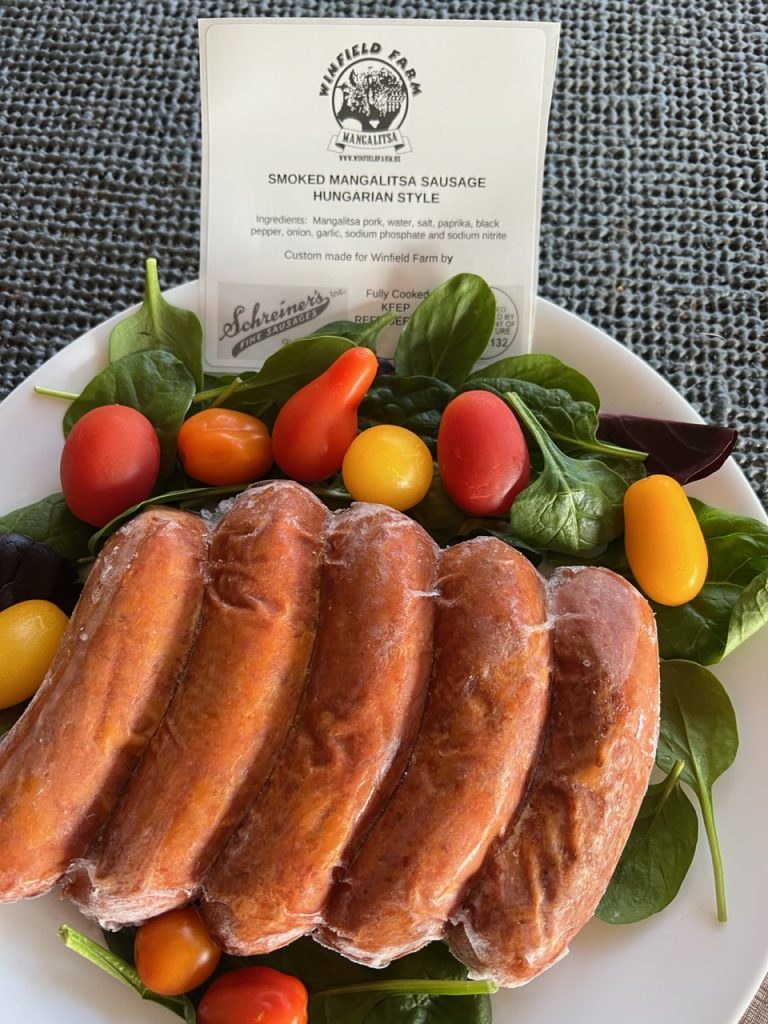
A package of Hungarian Style Mangalitsa sausage straight from the freezer. These weiners are so good, we often eat them straight out of the package, cold.
The future of our new relationship with Schreiner’s is bright! Schreiner’s can make Mangalitsa Kielbasa (Polish sausage), black forest ham, and many other specialty items for Winfield Farm. We’ll keep you posted on progress.
Meantime, we encourage you to try Schreiner’s smoked Mangalitsa sausage – Hungarian style.
We love these weiners, and hope you will too!!
Note: Smoked Mangalitsa Sausage – Hungarian style is now available for online ordering!
Panchetta from Winfield Farm Mangalitsa
According to Wikipedia, Pancetta is salt-cured pork belly meat.
In Italy, it is often used to add depth to soups and pastas. Foodies worldwide value Pancetta’s flavor profile. Two basic types of pancetta are arrotolata (rolled) and stesa (flat).
For cooking, pancetta stesa may be cut into cubes for use in carbonara pasta or pizza, as is typically found in central and southern Italy. In northern Italy, pancetta arrotolata is commonly served rolled and thinly sliced, and consumed raw (although guanciale, cured jowl meat, is generally considered more traditional).
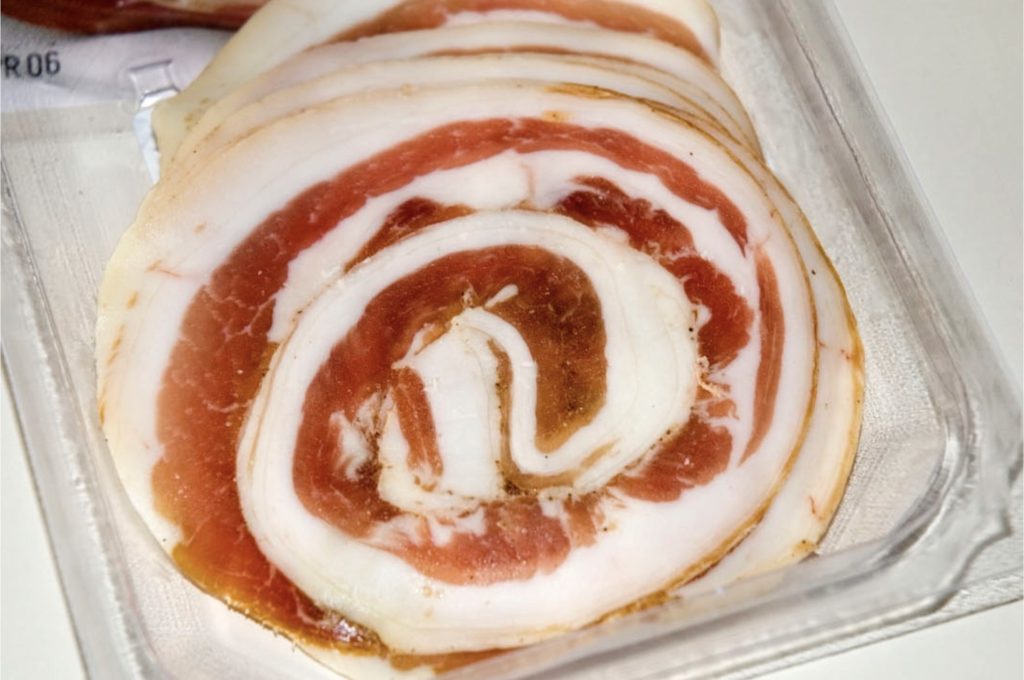 Photo credit: Nachoman-au – CC BY-SA 3.0, https://commons.wikimedia.org/w/index.php?curid=522168
The art of pancetta, as with all salume products, is in the curing process. Here at Winfield Farm, we are pleased to offer an exclusive treat: Mangalitsa pork pancetta cured by Alle Pia Fine Cured Meats.
Following their family tradition, and inspected by USDA, Alle Pia first marinates the Mangalitsa bellies in vacuum-sealed bags for three weeks, to infuse special seasonings, including rosemary, garlic, juniper berry and sea salt. As part of the curing process, the bellies are then removed from the bags and hung in a temperature-controlled chamber for 30 days.
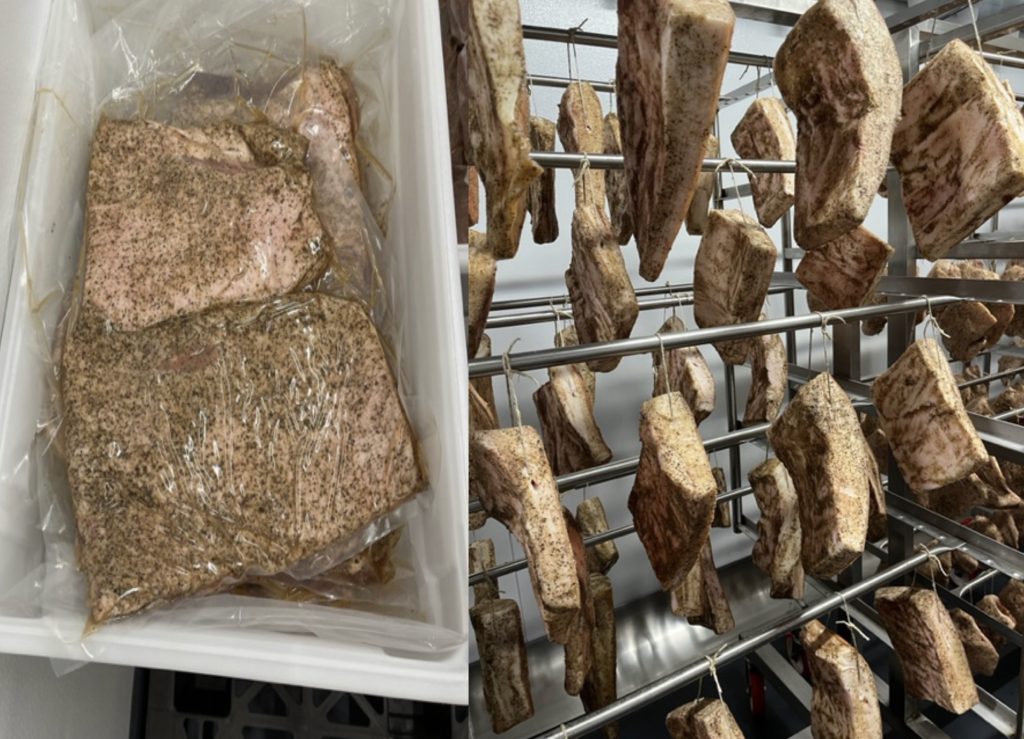
You can taste Mangalitsa magic by special ordering Mangalitsa pancetta (stesa). Email us directly at Winfield Farm (dplesch@gmail.com). Supply is limited (not listed on our online Mangalitsa Market).
$35 / lb Pieces average approx. 4-5 pounds each
Summer ’23 Mangalitsa Sausage Special
Winfield Farm now has a bountiful supply of Mangalitsa link sausage in 3 yummy flavors:
there’s the traditional bratwurst and sweet Italian, and also our new favorite – salt ‘n pepper sausage.
S & P is simply pure Mangalitsa pork with a dash of – you guessed it.
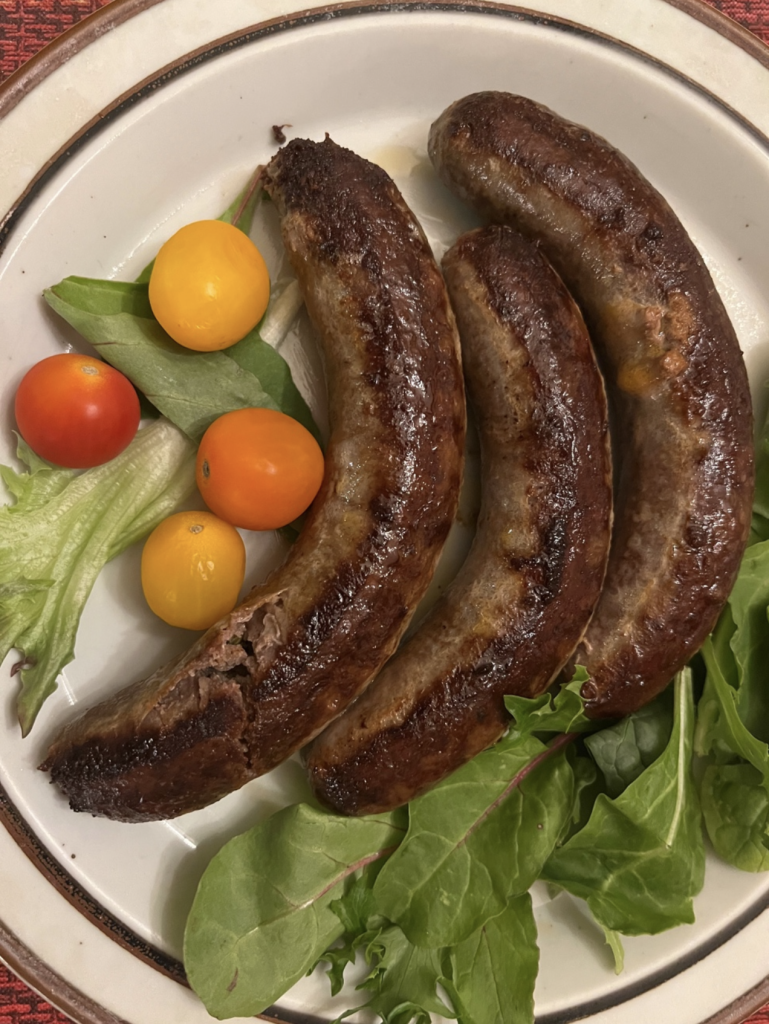
Winfield Farm Mangalitsa link sausage comes packaged 4 links per pack — packages are about 1.4 pounds each. Cost is $16 / pound. (Approx. $22.40 per package)
PLEASE NOTE: We’re offering a special introductory price for our new S & P link sausage — this offer is good through August 31.
Try S & P and get a 10% discount on your order – To order, email Diane and enter “summer sausage special “ in the subject line. Let me know how many packages you would like, and I will invoice you directly via PayPal with your discount.
Please be sure to include your name, address and phone number. (Shipping cost is extra).
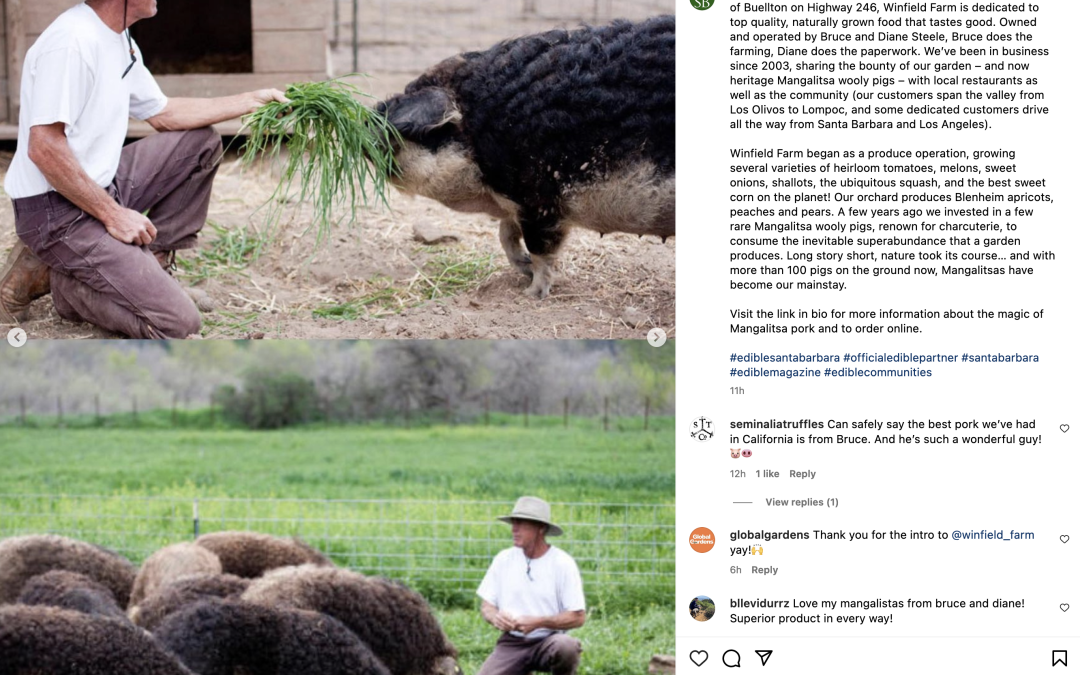
New Profile in Edible Santa Barbara Magazine
We’re so happy to report this neat profile of Winfield Farm Edible Santa Barbara Magazine posted on their Instagram:
Nestled in the Santa Ynez River valley 3 miles west of Buellton on Highway 246, Winfield Farm is dedicated to top quality, naturally grown food that tastes good. Owned and operated by Bruce and Diane Steele, Bruce does the farming, Diane does the paperwork. We’ve been in business since 2003, sharing the bounty of our garden – and now heritage Mangalitsa wooly pigs – with local restaurants as well as the community (our customers span the valley from Los Olivos to Lompoc, and some dedicated customers drive all the way from Santa Barbara and Los Angeles).
Winfield Farm began as a produce operation, growing several varieties of heirloom tomatoes, melons, sweet onions, shallots, the ubiquitous squash, and the best sweet corn on the planet! Our orchard produces Blenheim apricots, peaches and pears. A few years ago we invested in a few rare Mangalitsa wooly pigs, renown for charcuterie, to consume the inevitable superabundance that a garden produces. Long story short, nature took its course… and with more than 100 pigs on the ground now, Mangalitsas have become our mainstay.

Announcing a New Mangalitsa Product
Winfield Farm is pleased to announce that we’re now working with a new USDA butcher – Old Fashion Country Butcher in Santa Paula. Kent Short is a third-generation butcher extraordinaire – the genius who turned us onto Mangalitsa collar steaks and secreto. His most recent suggestion is a cut that he labels “top round steak.”
Thin-sliced from the culatello – the large upper muscle of the ham leg – this cut is extremely versatile, as well as flavorful. For our trial run, Kent sliced the ham steaks to about 1/2 inch thickness, then ran them through a tenderizer. Bruce also lightly pounded the meat before cooking, and the steaks came out very tender. He’s now thinking the steaks don’t need extra tenderizing – a light pounding will be sufficient.
Bruce made Mangalitsa pork schnitzel for our first taste-test, following a simple recipe:
Dust the steaks with lightly seasoned flour, dip in egg wash (some recipes also call for adding milk to the egg wash, but Bruce used straight beaten eggs). He then coated the steaks with Panko and fried them quickly in a hot pan on both sides until golden brown. Bruce fried the steaks in our Mangalitsa lard, rather than butter, to enhance the flavor.
(Mangalitsa lard is actually better than butter – high in oleic acid and low in saturated fat – it melts in your mouth!)
Some recipes call for seasoning the pan with a thyme sprig before adding the steaks, or you could add a pinch of thyme to the seasoned flour, as Bruce did.
Serve with lemon wedges – a must – a squeeze of lemon juice adds freshness and tang that completes the dish.
Garnishing the plate with a thyme sprig also is optional. Our taste-test was a rousing success! Delicious!!
This cut is also great for pork cutlets or chicken-fried steak.
BEFORE

AFTER
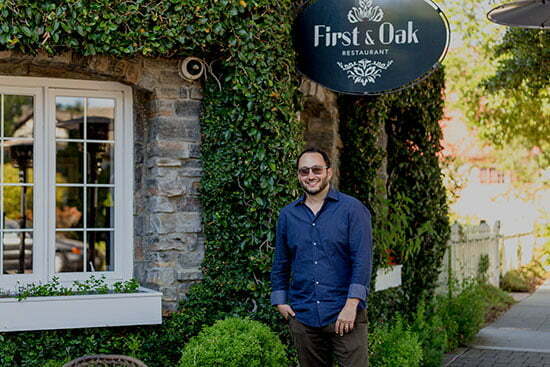
Serving a New Restaurant: First and Oak in Solvang
We are thrilled to be serving a new restaurant!
Sourcing sustainable meat and seafood is at the heart & soul of what they do at First and Oak, located inside the Mirabelle Inn, in the heart of Solvang, California. Proud recipients of a Michelin Plate designation, they offer a seasonal menu that highlights local & organic ingredients prepared in a thoughtful manner. Their finely curated courses are all about transcending flavors, featuring unique surprises such as our Mangalitsa loin chops.
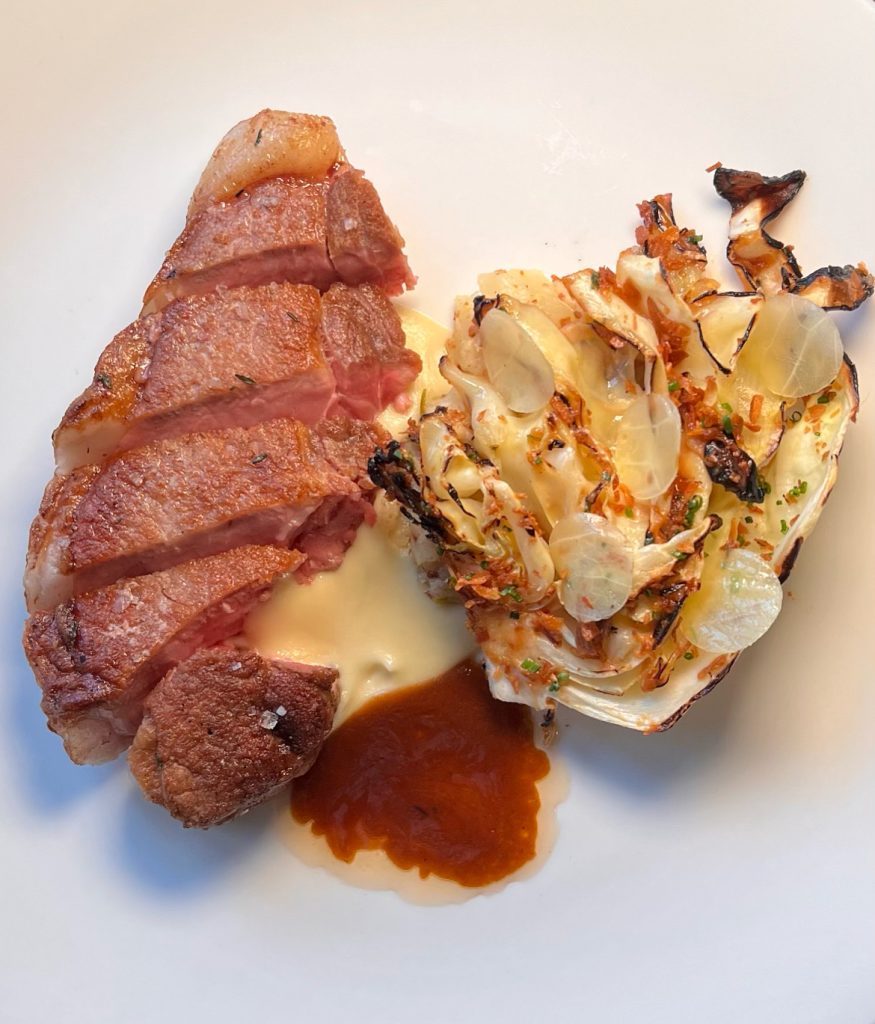
Mangalitsa Loin Chop
They love to highlight small farms like us that share the same passion. Here’s what they say about Winfield Farm:
View this post on Instagram